
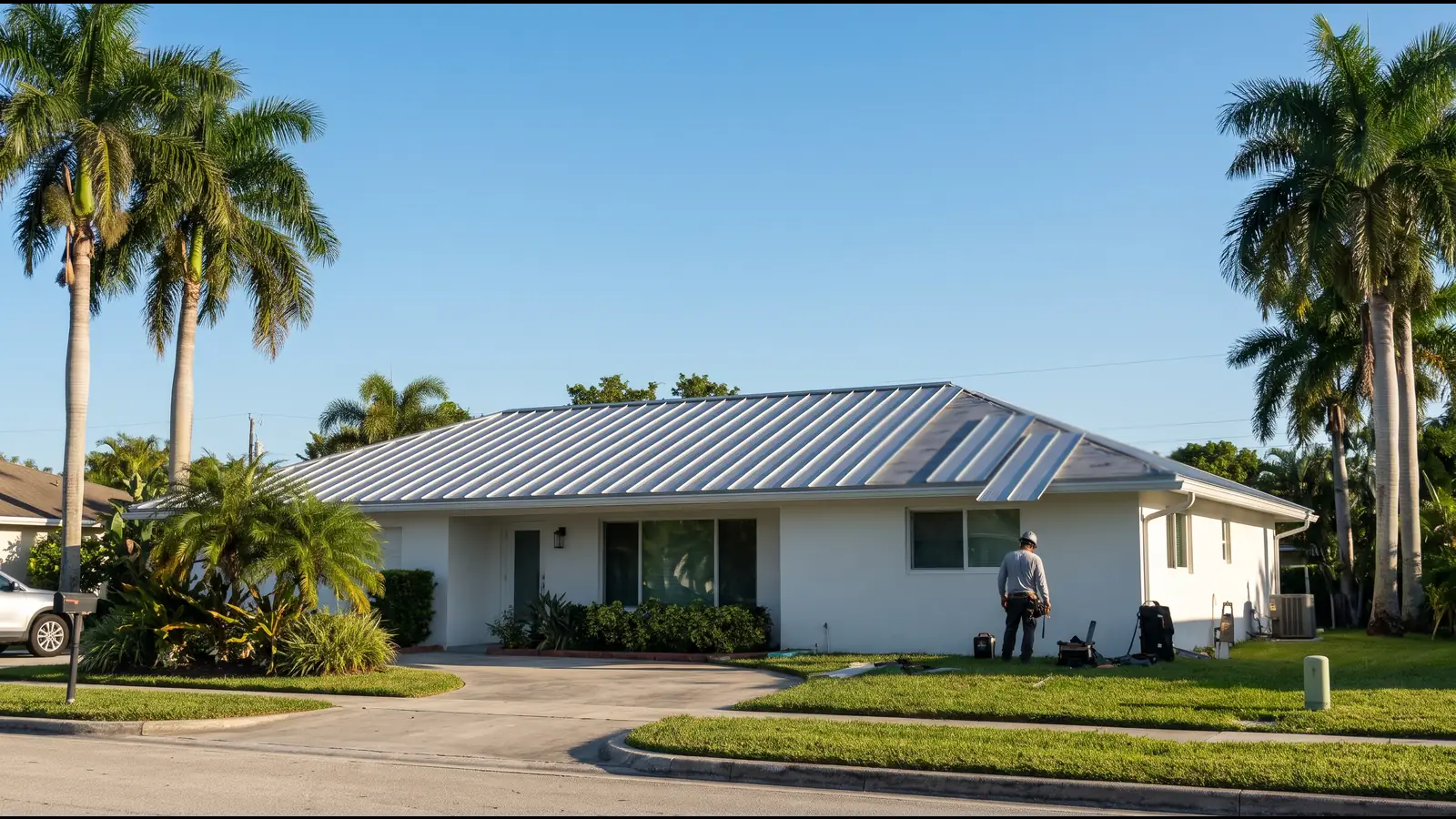
Standing Seam Metal Roof Panels and Finishes
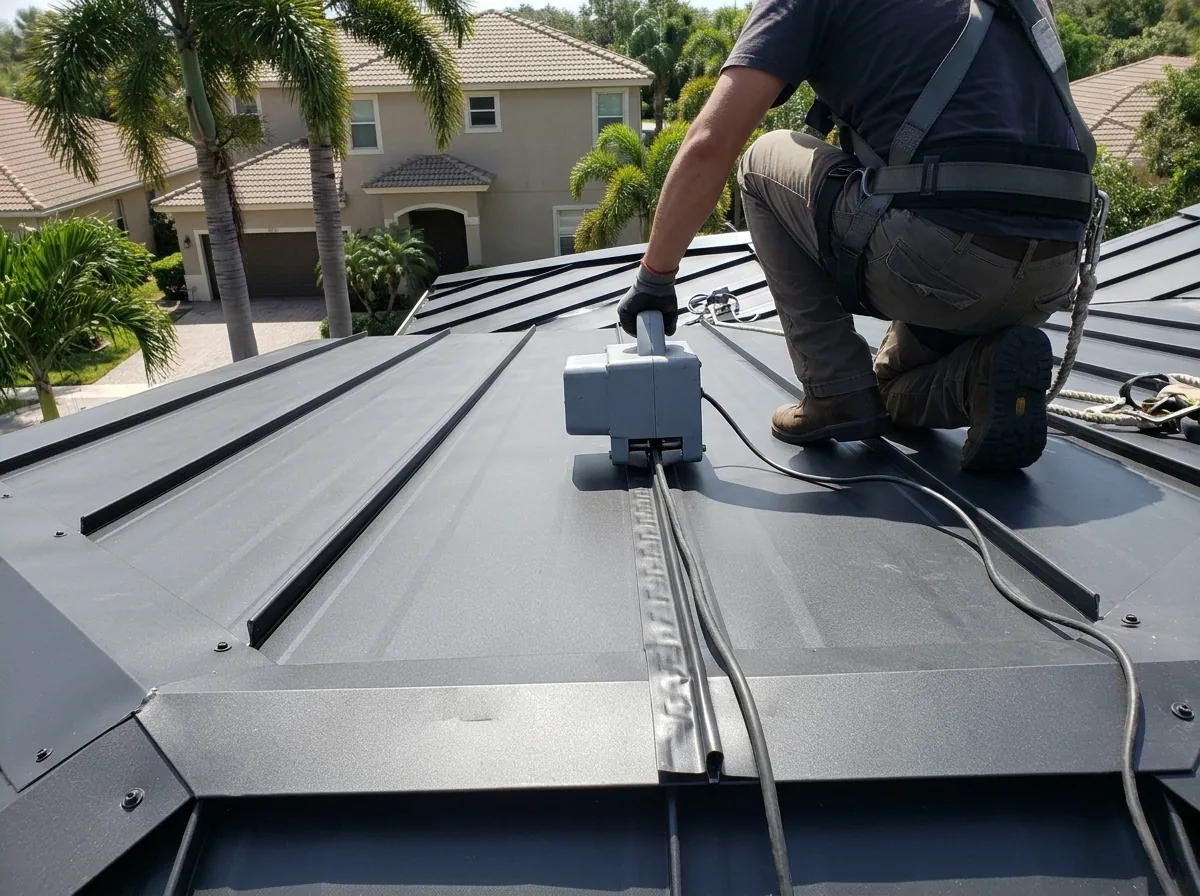
Mechanically Seamed Panels
On a mechanically seamed roof, the panels are set over hidden clips and then a seaming tool runs along each joint, folding the two panel legs together. Guides rate it the more secure and weathertight of the two seam types. The trade-off is labor: seaming takes time and skill, so expect a higher quote than for snap-lock on the same roof. Where the product approval for a panel calls for a folded seam, it isn't optional.
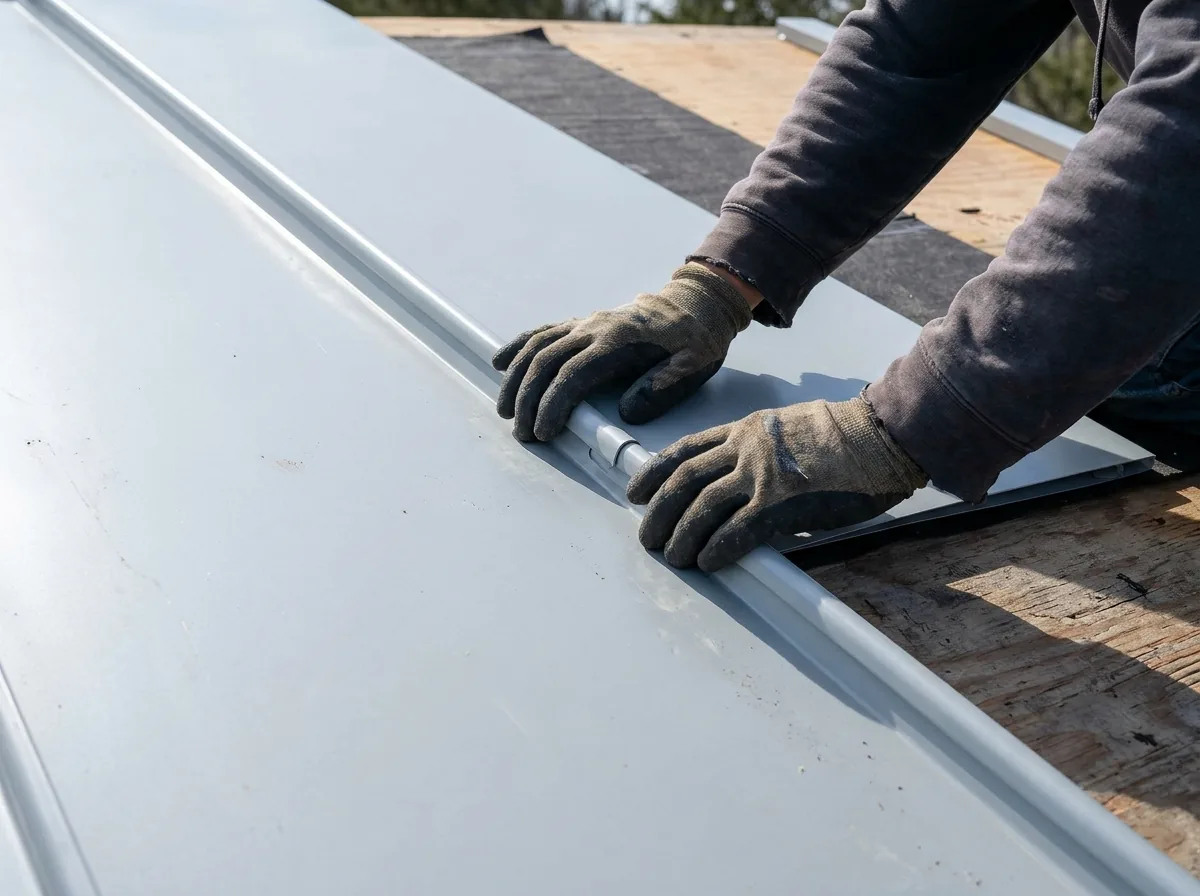
Snap-Lock Panels
Snap-lock panels close by pressing one panel's leg over the next, with no seaming tool. That makes them quicker to install, which keeps labor cost down. Ask to see the approval's design pressures for the snap-lock panel quoted. Edge and corner zones on a Broward roof take the highest wind loads.
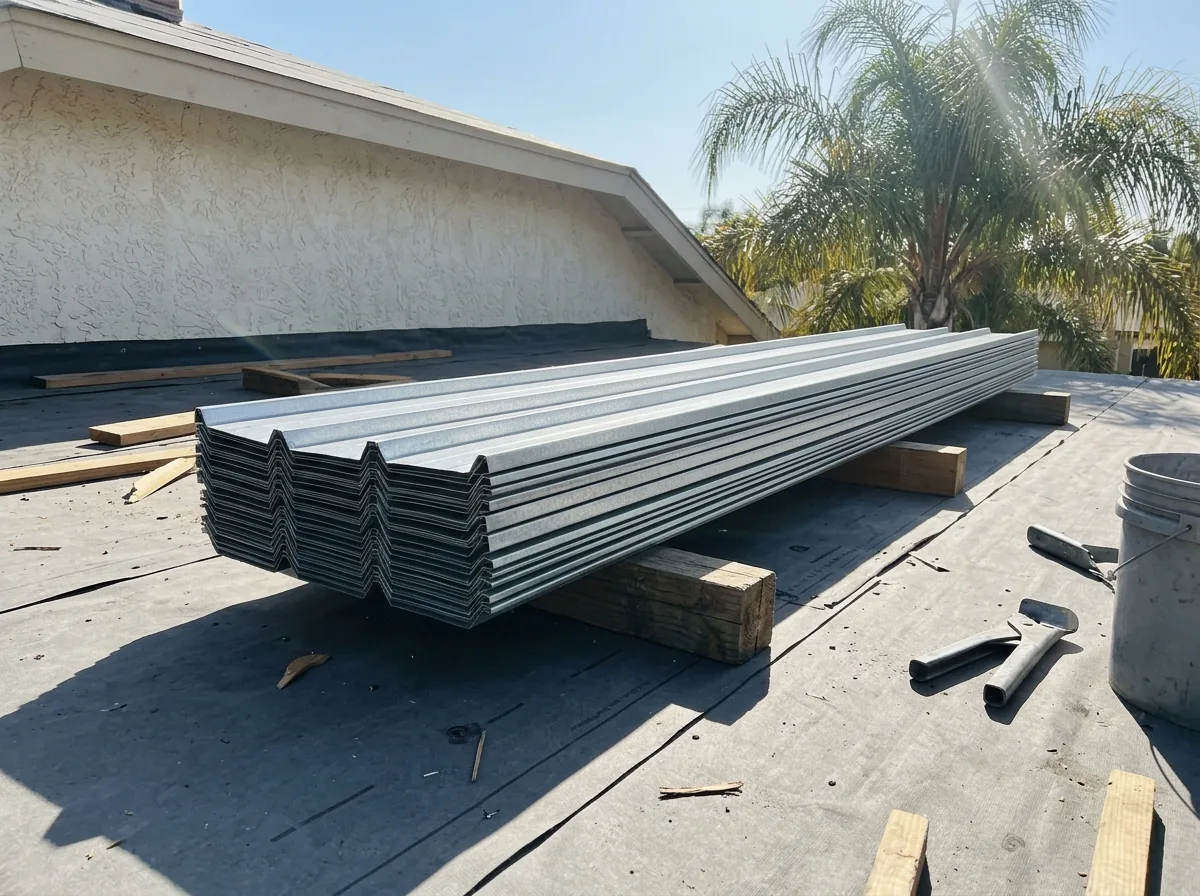
24-Gauge Galvalume Steel Panels
Galvalume is steel coated with an alloy of about 55% aluminum and 1.6% silicon, the rest zinc, made to ASTM A792. The coating weight is the number after "AZ". A thicker gauge and a heavier coating both cost more. Inland, it's the usual steel for standing seam:
| Galvalume item | Detail |
|---|---|
| 24 gauge | HomeGuide's pick for severe-weather areas, about $3 to $7 a square foot for material |
| 26 gauge | The HVHZ minimum, with G-90 coating |
| AZ50 and AZ55 | At least 0.50 and 0.55 ounces of coating per square foot, both sides combined |
| Installed price | About $800 to $1,300 per 100 square feet for Galvalume standing seam |
Near the water, read the salt-air warranty limits first.
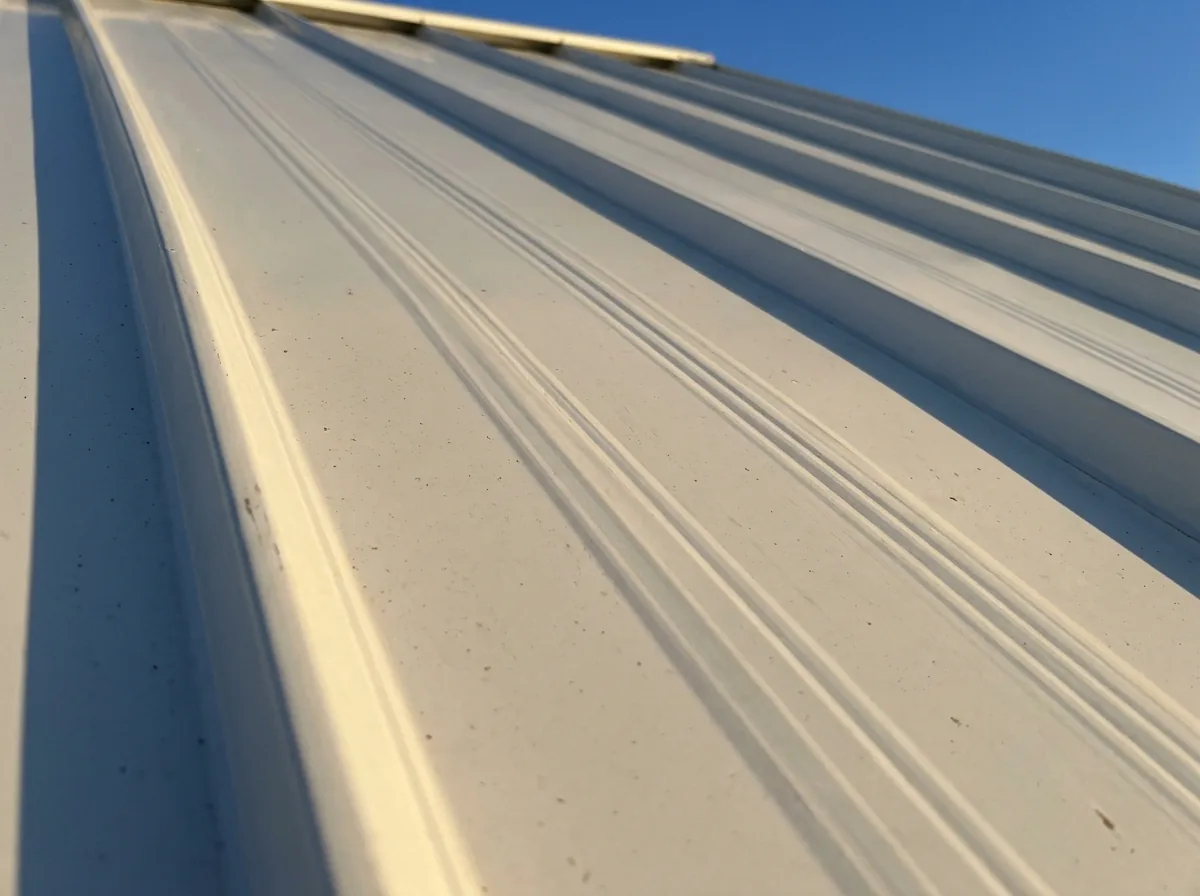
Striated and Pencil-Rib Panels
A flat pan between two seams can show waviness, called oil canning, once the sun hits it at a low angle. Striations or pencil ribs are shallow lines rolled into the pan that break up the reflection. HomeGuide lists a striated or ribbed panel as one way to prevent the look, along with a thicker gauge and a level deck. Panel makers treat some waviness as normal. One warranty excludes it outright.
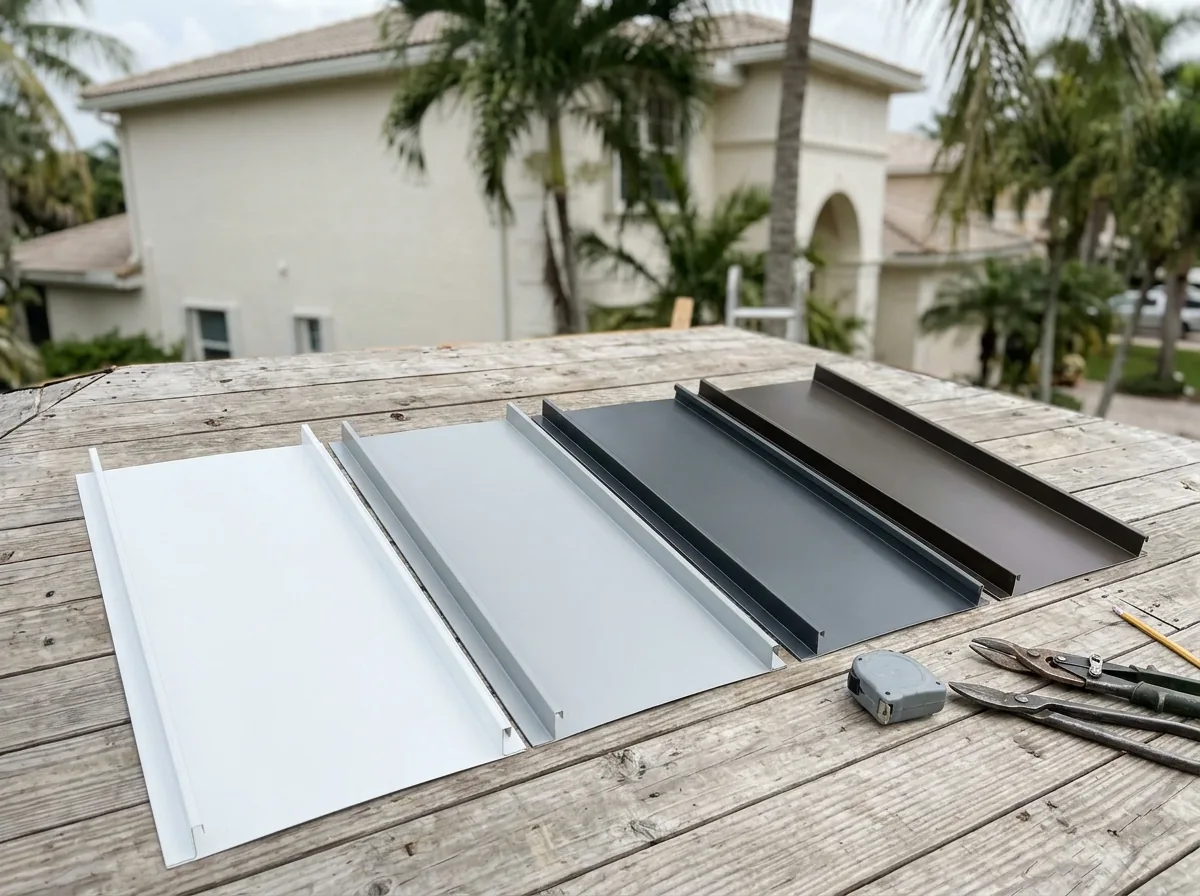
PVDF Finishes and Roof Colors
PVDF is the paint system most standing seam panels carry. Kynar 500 and Hylar 5000 are its resin names, and one maker's finish is a "full-strength 70%" blend. Guides rate PVDF better than SMP (silicone-modified polyester) on fade and corrosion, though PVDF scratches more easily. Colors priced as standard cost less than custom runs. Typical PVDF warranty terms on one maker's standard colors:
- no cracking or peeling for 40 years
- chalking no worse than ASTM D4214 rating #8 for 30 years
- fading no more than 5 Hunter delta-E units for 30 years
- corrosion of the steel underneath not covered by the paint warranty
Why Pompano Beach homeowners call Pompano Metal Roofing
- One independent roofer per request, never a call list
- Ask for tear-off, deck repair and permit as separate lines
- No fee to homeowners for the referral or the estimate
- Your details go to that one roofer and nobody else
Standing Seam Metal Roof Cost
Standing seam is the most expensive of the common metal systems because of the hidden clips and the labor in each seam. Guide figures, installed:
| Cost guide | Installed price |
|---|---|
| HomeGuide | $9 to $16 a square foot, about $13,500 to $40,000 for a typical home |
| Modernize | $8 to $14 a square foot, about $16,000 to $28,000 for a 2,000 sq ft roof |
| Forbes | $9 to $24 a square foot |
| Aluminum panels | Higher again; see the aluminum roofing page |
Standing Seam Details to Settle Before You Sign
Two standing seam quotes can hide very different roofs. Get these in writing:
The approval number and seam type
The product approval names the panel, seam and clip. The quote should match it, as the installation page explains.Clip spacing at the edges
Approvals set closer clip spacing at the perimeter and corners than in the field. One aluminum panel goes from 18 inches to 12.Gauge or thickness
Written as a number, not "heavy duty."The finish warranty for your address
Some apply only beyond a set distance from salt water.The underlayment
Which of the code methods is used, and whether it is rated for metal-roof heat.The roof pitch
Low pitches have a code minimum slope for standing seam.Plans for solar
Panels clamp to the seams, so tell the roofer before you choose a profile (solar on metal roofs).