
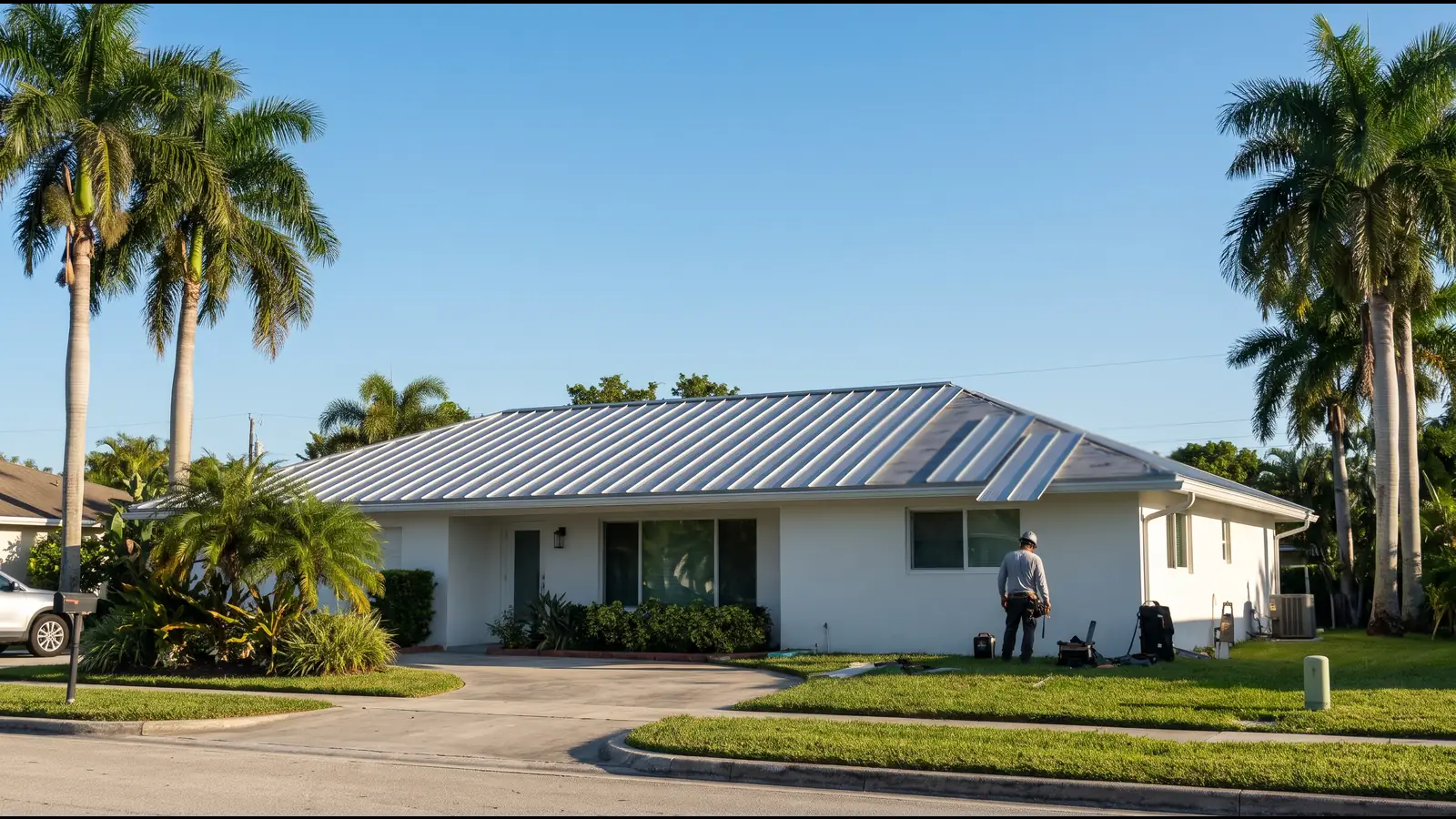
Copper Roofing for Bay Windows, Entries and Accents
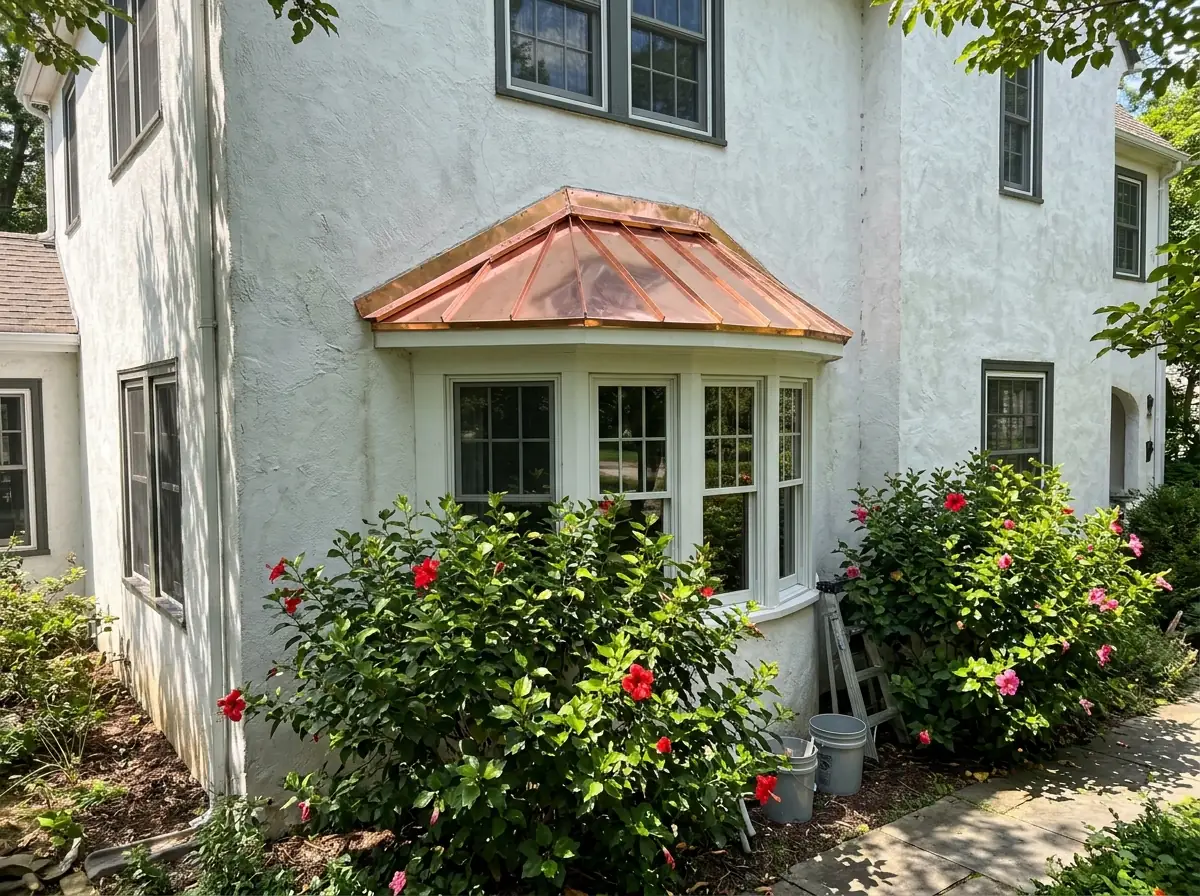
Copper Bay Window Roofs
A bay window roof is usually a small hip or half-round that ties into a wall, which makes it a natural place for copper. The panels are held by concealed cleats rather than screws through the face. IBHS roofing guidance calls for cleats no more than 12 inches apart on standing and batten seam copper, with two fasteners in each. Most of the skill goes into the line where the roof meets the wall, and a good copper roofer takes time over that counterflashing.
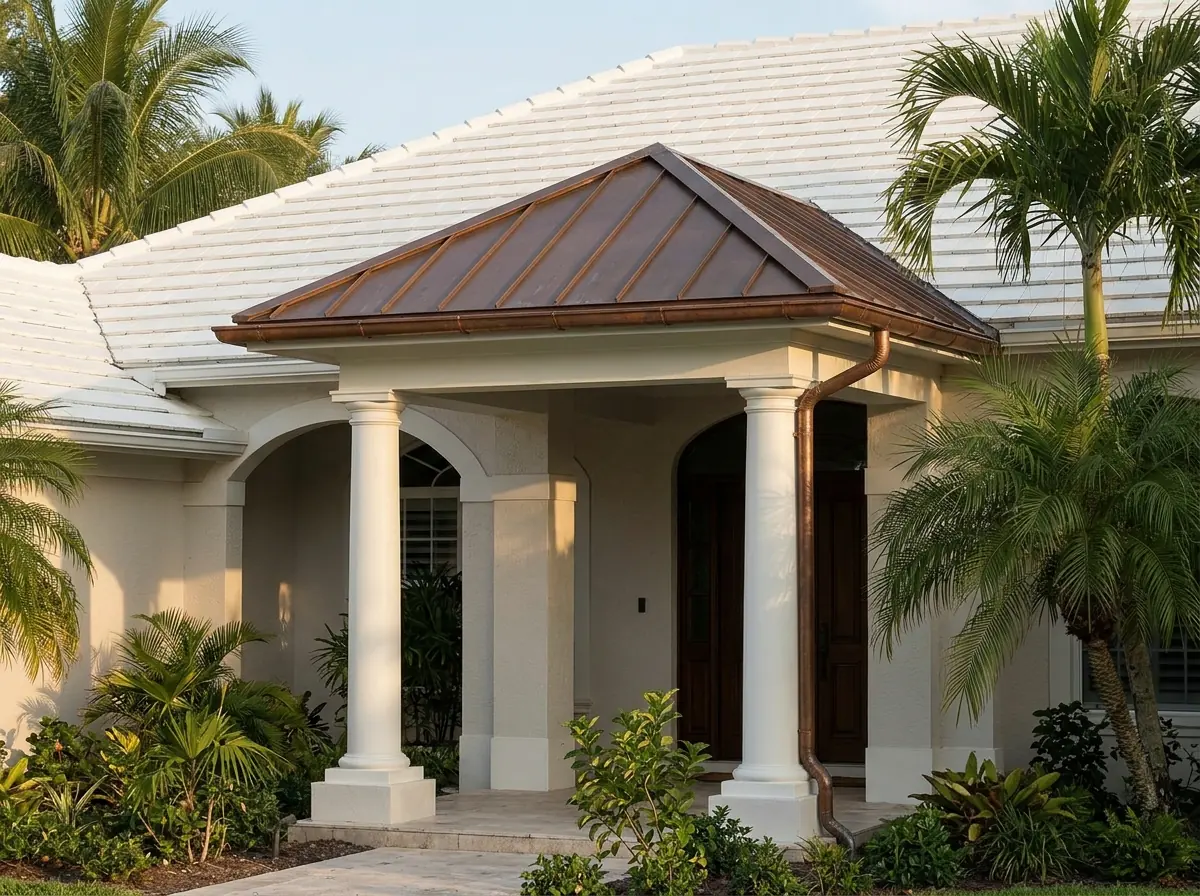
Entry, Portico and Front Door Roofs
An entry roof is the copper most people will see up close, so seam spacing and straight edges matter as much as the metal. Plan where its rainwater goes. Copper and its runoff corrode less noble metals they touch, so water from a copper portico shouldn't drain onto an aluminum gutter or a Galvalume roof below. Ask for copper or compatible gutters under it, or a downspout that clears the other metal.
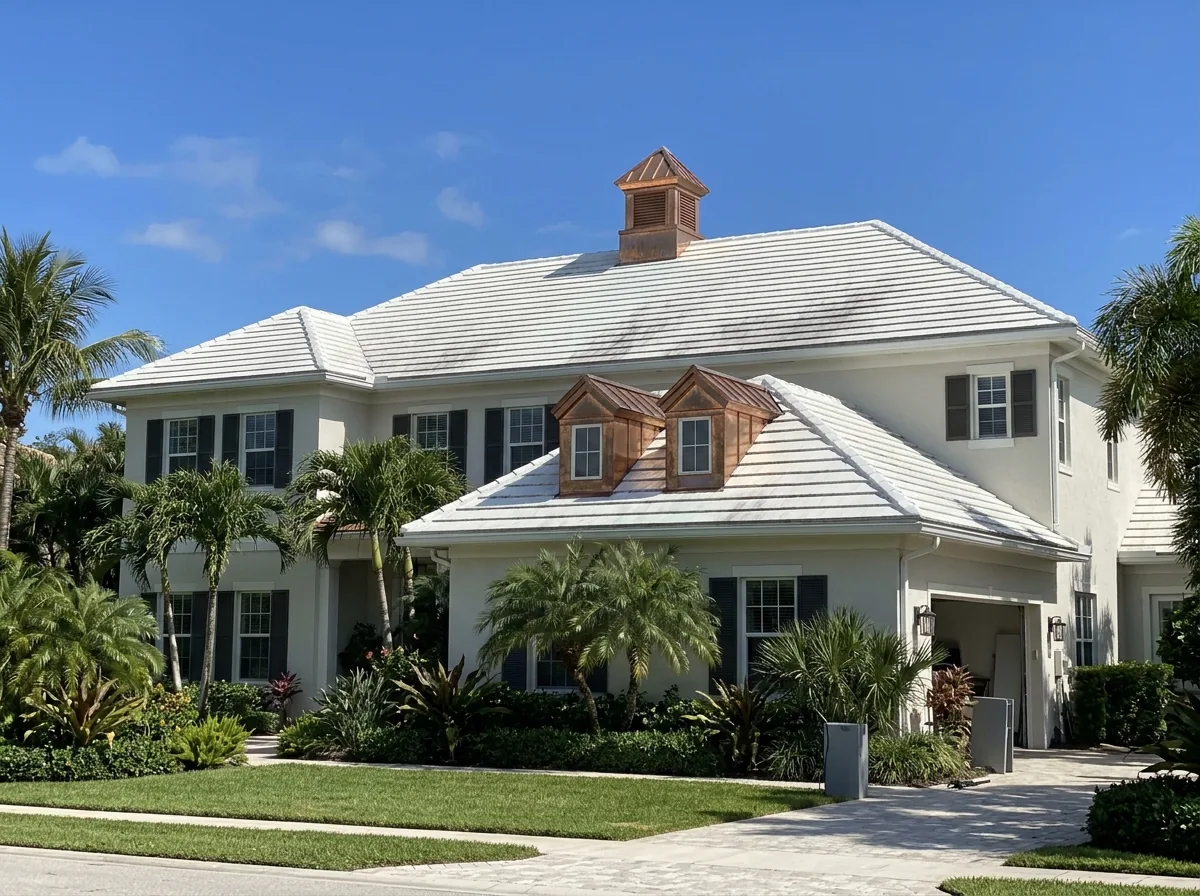
Cupolas and Dormers
Cupolas and dormers are small, steep and fiddly, with many cuts and corners per square foot. The fasteners have to match the metal. The Florida Building Code calls for copper, brass, bronze, copper alloy or 300-series stainless steel fasteners on copper roofs, and IBHS notes that the wrong fastener corrodes where it touches the copper. The code also rates 16-ounce copper sheet over a wood deck as a Class A fire-resistant roof assembly.
Standing Seam or Flat-Lock Copper
Copper goes on in a few traditional seam styles, chosen mostly by slope:
- Standing seam, 16-ounce. About 123 pounds per 100 square feet, raised seams, the usual choice on pitched accent roofs.
- Batten seam, 20-ounce. Up to about 190 pounds per 100 square feet, with seams formed over wood battens.
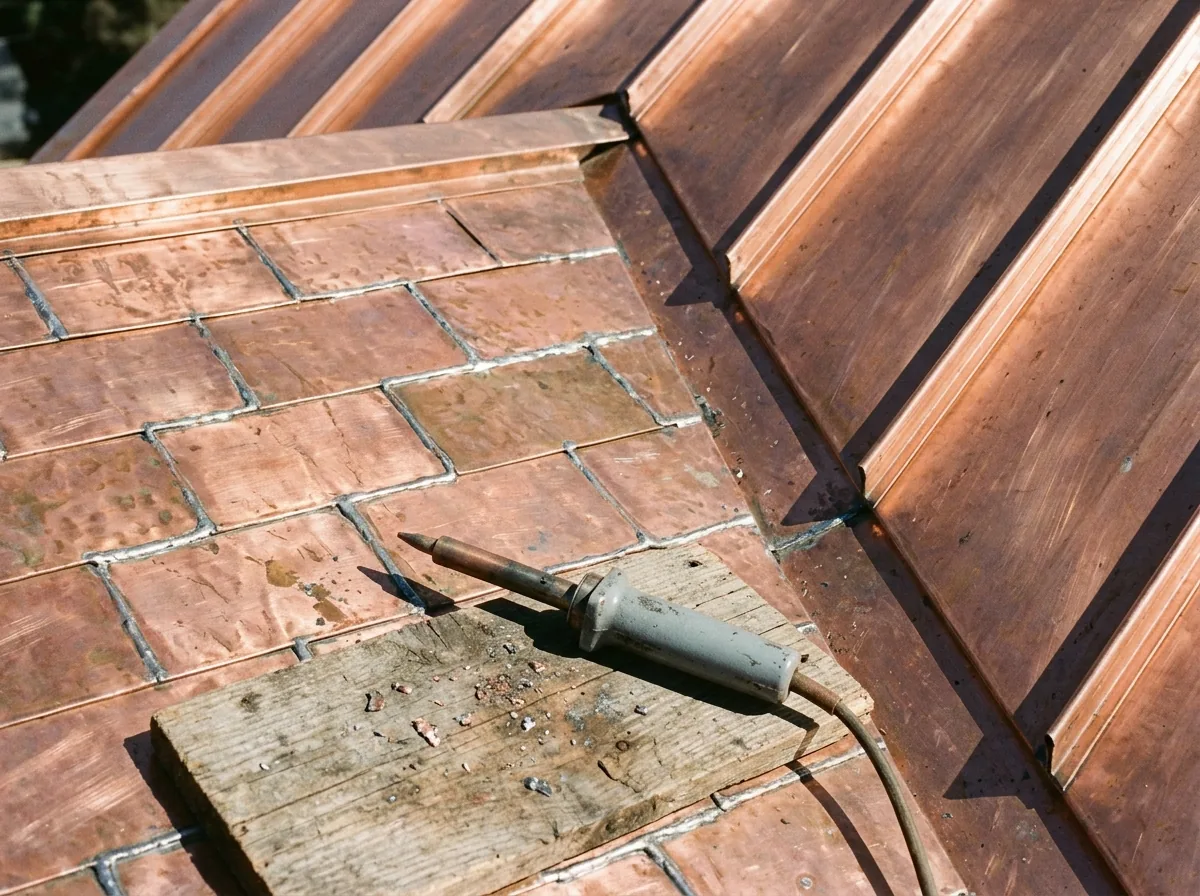
- Flat seam. Small interlocked pans, left unsoldered on steep slopes and soldered on low slopes. Soldered flat-lock takes more labor and costs more.
Why Pompano Beach homeowners call Pompano Metal Roofing
- One independent roofer per request, never a call list
- Ask for tear-off, deck repair and permit as separate lines
- No fee to homeowners for the referral or the estimate
- Your details go to that one roofer and nobody else
Copper Roofing in Salt Air: Color, Cleaning and Repairs
Fresh copper turns brown, then darker, then green. IBHS puts a full patina at often 25 years on a sloped roof, faster in warm, humid weather. The Copper Development Association's estimate for coastal sites is shorter, 5 to 7 years. Either way, expect uneven color in the early years. Faces that get more sun or more runoff change first.
Chemical patinas that turn new copper green right away tend to flake and stain the surfaces around them, so CDA advises caution with them. Copper doesn't grow algae. For cleaning, IBHS describes a low-pressure rinse and, for stubborn stains, a light wash of non-chlorinated trisodium phosphate.
Repairs are a solder job. A small puncture is cleaned, tinned and soldered over with a copper patch. Bright new copper won't match a weathered roof at first, but it darkens to blend in over time. Ask any roofer who quotes copper repairs whether they solder, because sealant smeared over a copper seam makes the proper fix harder later.
See standing seam panels for the main roof around the copper.