
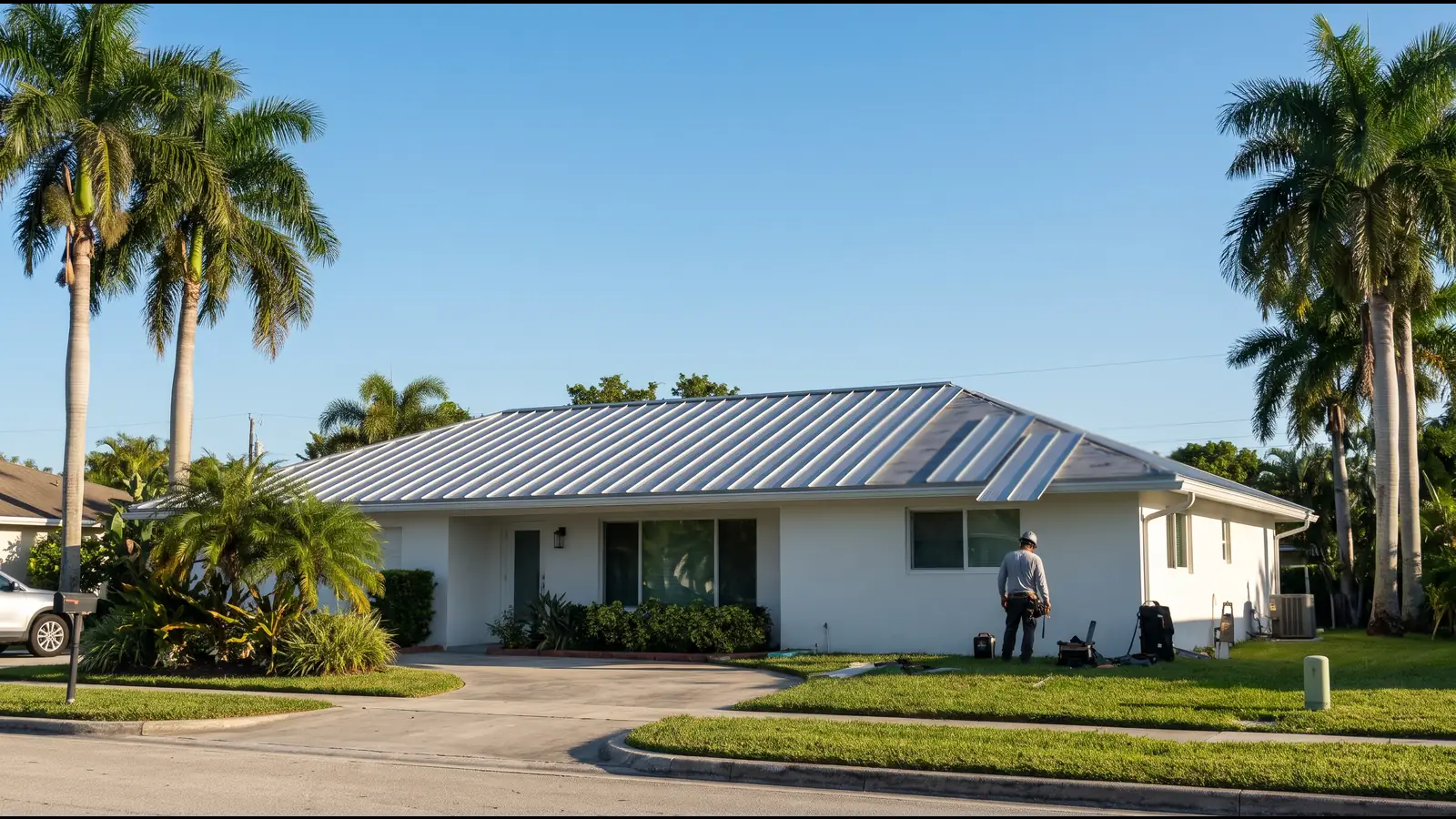
Condo and HOA Metal Roofing by Building Type
Association roofs are bought by a board, paid for out of reserves or assessments and installed while people live underneath. The building type sets how the job is split up, and who has to sign off.
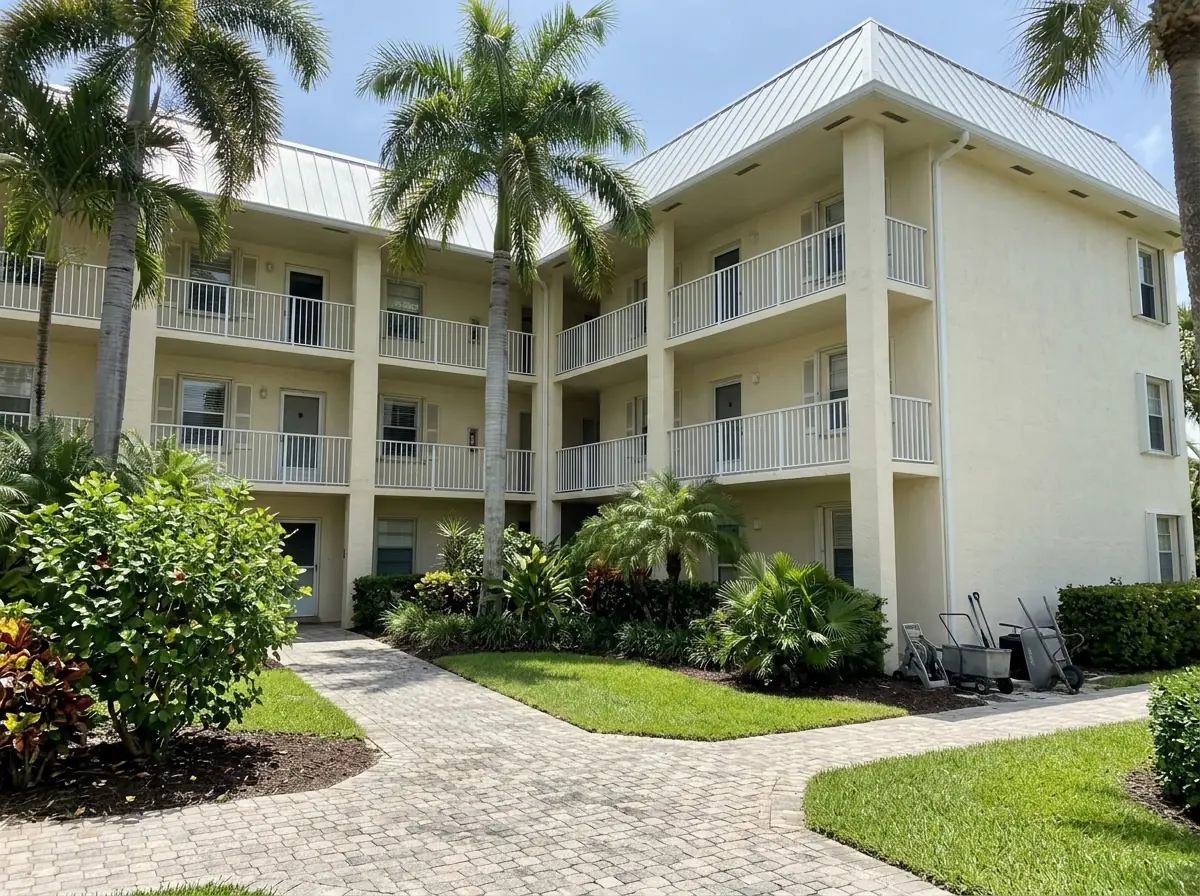
Low-Rise Condo Buildings
On a condo with several buildings, ask for a separate price, permit and schedule for each one. A building three habitable stories or taller also falls under Florida's structural integrity reserve study, which has to cover the roof's remaining life and replacement cost. Metal's long service life can change the reserve math: a study may recommend no replacement reserves for an item with more than 25 years of life left.
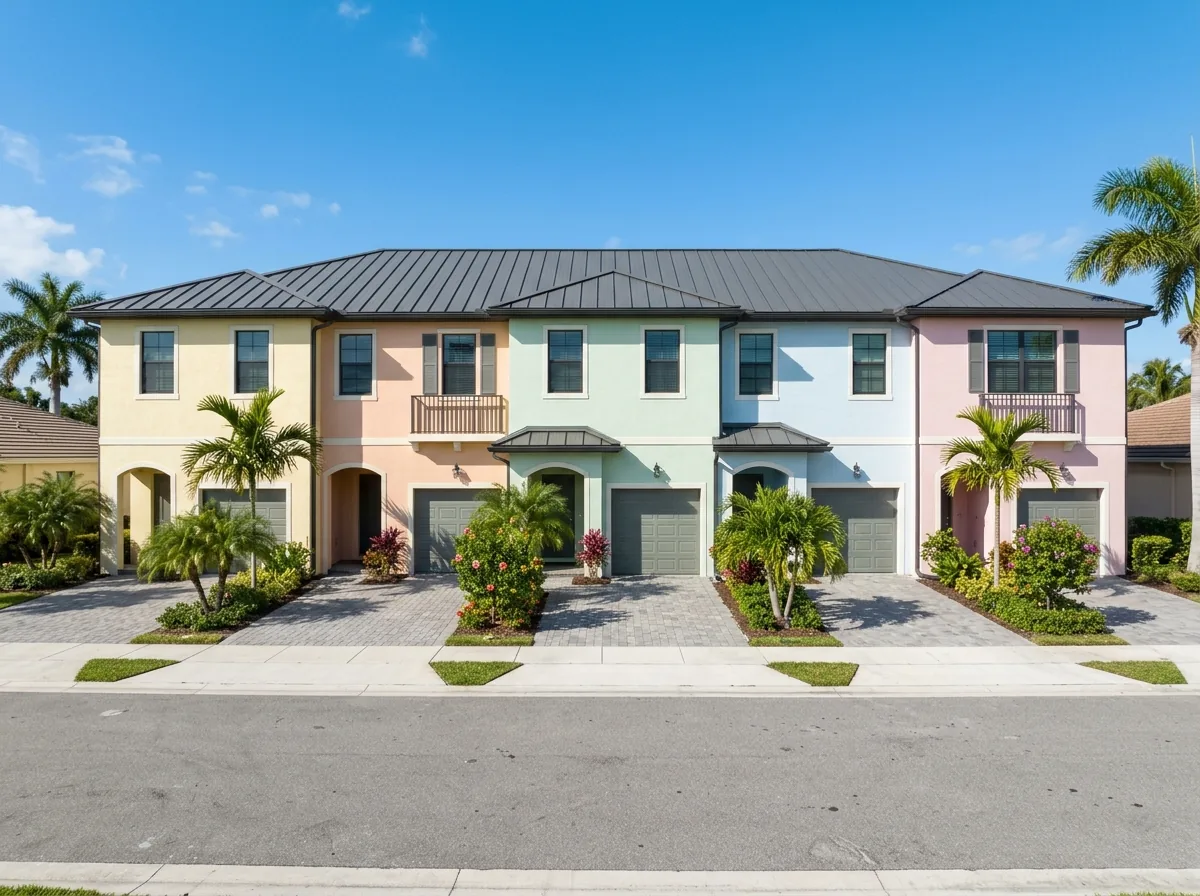
Townhouse Rows
A row of townhouses often looks like one roof but is several. Florida's building code treats a roof as separate "roof sections" where it is divided by parapet walls, a change in height, a change in roof type or a legal description, which can mean each owner's slice counts on its own. That matters for the 25% repair rule and for who pays. Ask the roofer to show the section lines on the proposal, and match panel profile and color across the whole row.
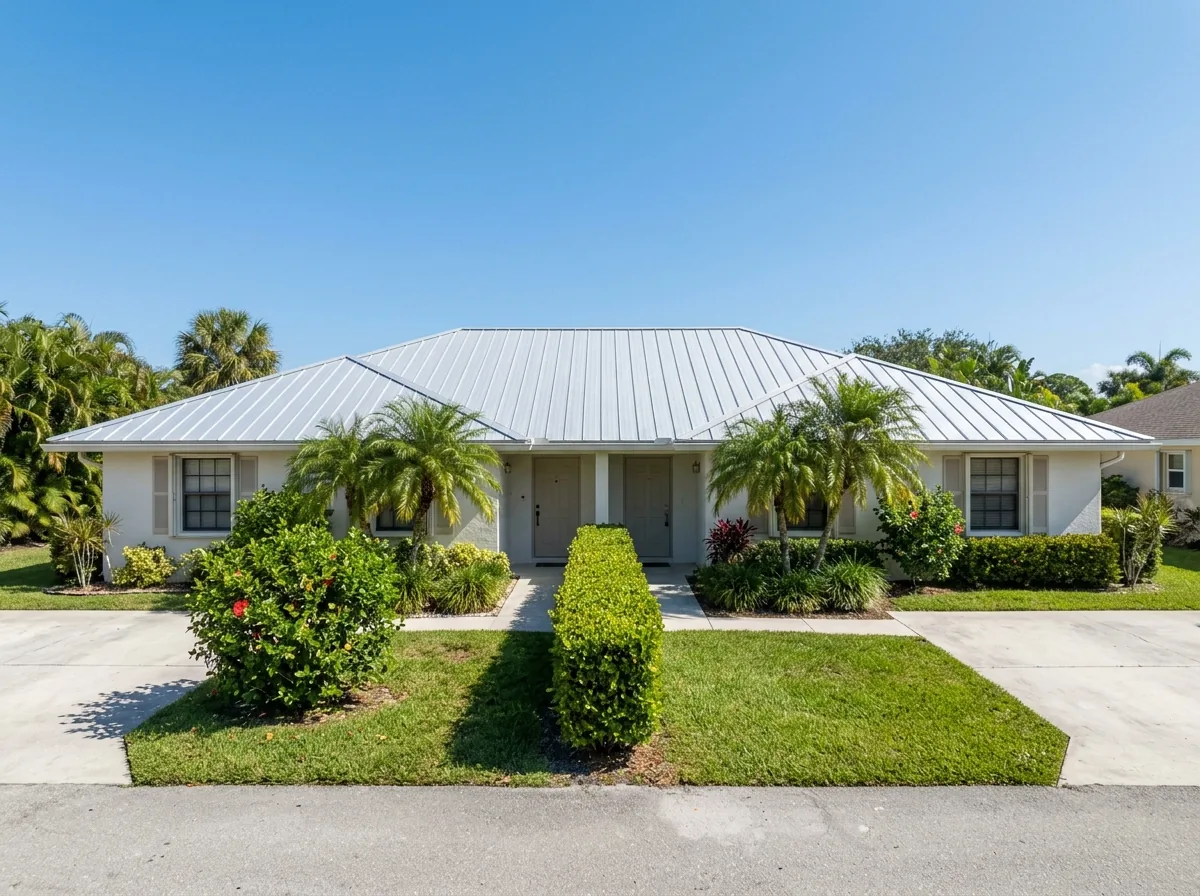
Villas and Duplexes Under One Roof
Villas and duplexes put two owners under one roof, and sometimes only one of them is ready for metal. A half-and-half job leaves a joint at the party line that has to be flashed as a transition between two systems, and one side's tear-off exposes the other side's deck edge. Where both owners agree, one permit and one crew for the whole roof is simpler. Where they don't, ask the roofer how the tie-in will be flashed, and get the HOA's approval for the look before anyone signs.
HOA Architectural Approval
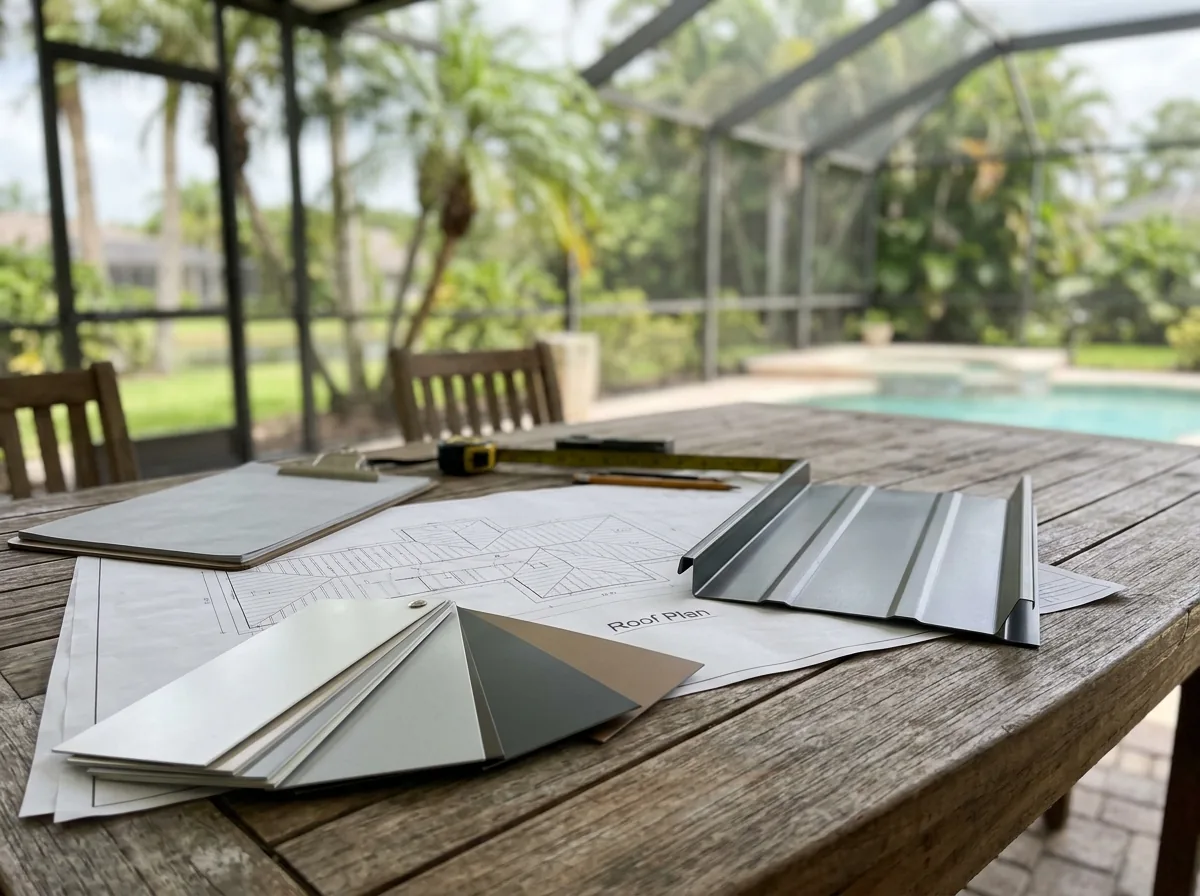
If your HOA reviews exterior changes, expect an application that covers panel profile, color, trim and sometimes a sample. Ask for the community's hurricane protection specifications as well as its architectural guidelines, because the specifications are what the statute says the board must follow. Send the product approval number and a color chip with the application, and don't schedule tear-off until the approval is in writing.
Why Pompano Beach homeowners call Pompano Metal Roofing
- One independent roofer per request, never a call list
- Ask for tear-off, deck repair and permit as separate lines
- No fee to homeowners for the referral or the estimate
- Your details go to that one roofer and nobody else
Florida Statutes on Association Metal Roofs
Two chapters of Florida law cover most association roofs, and they don't say the same thing:
HOAs, chapter 720
Section 720.3035(6) makes every HOA adopt hurricane protection specifications, which may set color and style. Roof systems recognized by the Florida Building Code that meet ASCE 7-22 count as hurricane protection. The board can't deny a conforming application, though it can require a unified look.Condos, reserves
Section 718.112 requires reserves for roof replacement in the condo budget, funded from a formula based on remaining life and replacement cost.Condos, reserve study
Buildings three habitable stories or taller need a structural integrity reserve study at least every 10 years, and the roof is the first item on its list.Condos, hurricane rule
The condo statute's hurricane protection section, 718.113(5), has no matching language naming roof systems, so don't assume the HOA roof rule carries over to a condo.
The association's declaration adds its own rules on top. Have the association's attorney read it before the board votes.
What a Board Should Ask For in a Metal Roof Proposal
One price per building
Itemized so tear-off, deck repair and the permit can each be compared.Product approval number
For the panel system, so the board can check it and owners can use it on their wind mitigation forms.Schedule and access plan
Which building goes first, where materials are staged, and how parking and walkways are protected.Owner notices
What residents need to move or protect, and when.
See commercial metal roofing for retail and warehouse buildings that an association manages but nobody lives in.