
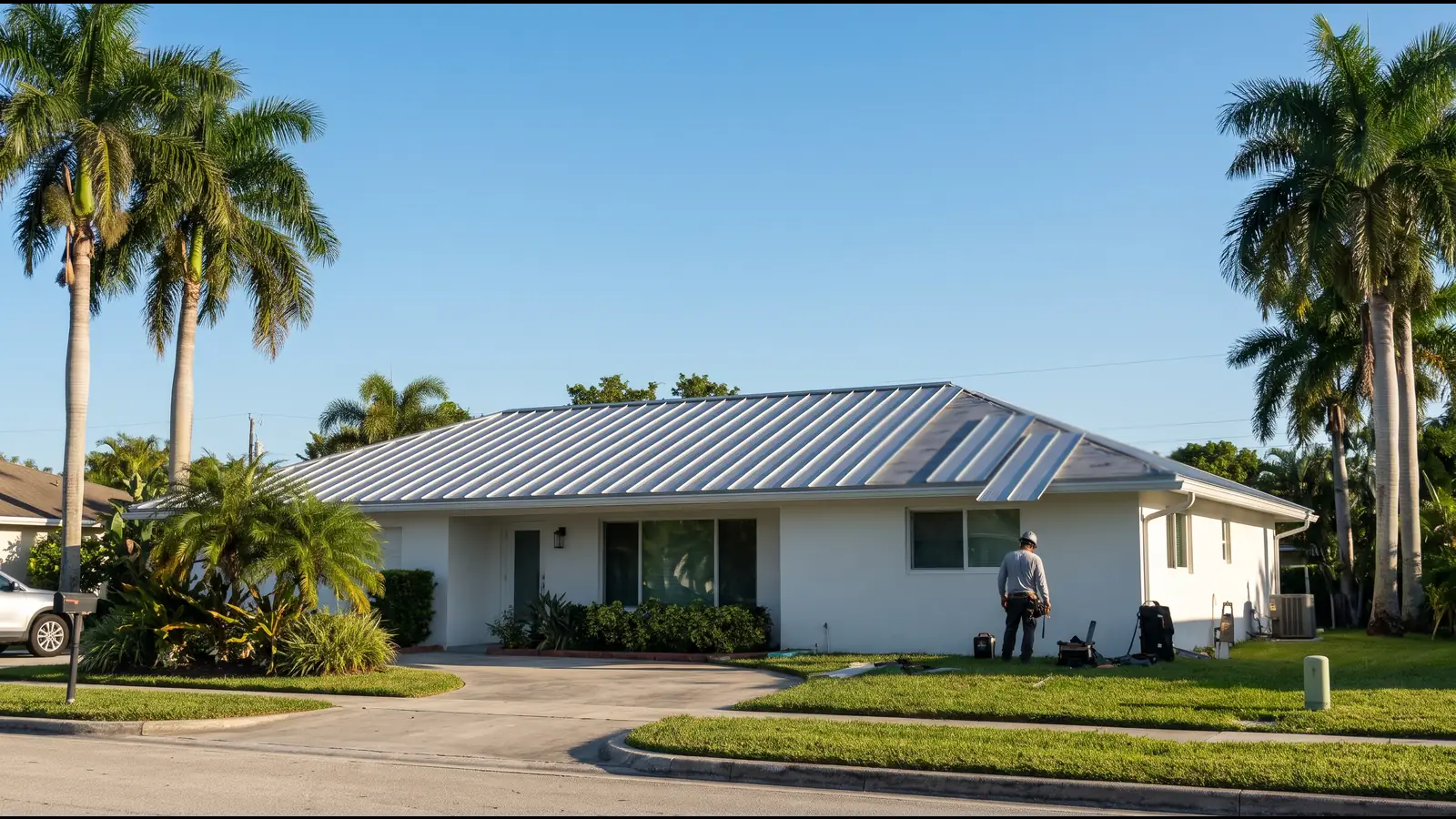
Metal Roof Installation From Deck to Drip Edge
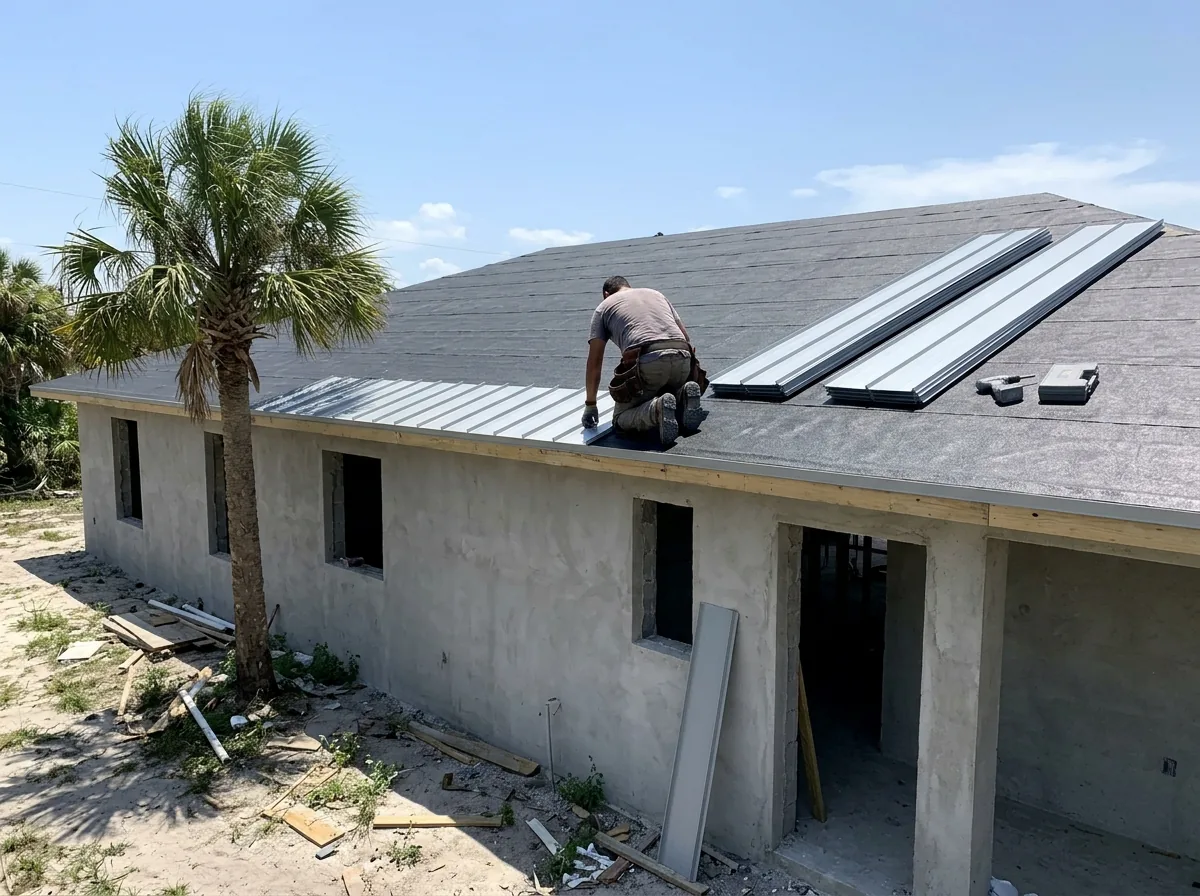
New-Construction Metal Roofs
A new house gives the roofer a clean, flat deck with nothing to tear off, which is the easiest condition for metal. The product approval still sets the deck. One aluminum standing seam system approved for the hurricane zone, for example, calls for:
- plywood at least 19/32 inch thick on new construction
- 8d ring-shank nails spaced 6 inches apart
Settle the sheathing thickness with the builder before it goes on, not after the panels arrive.
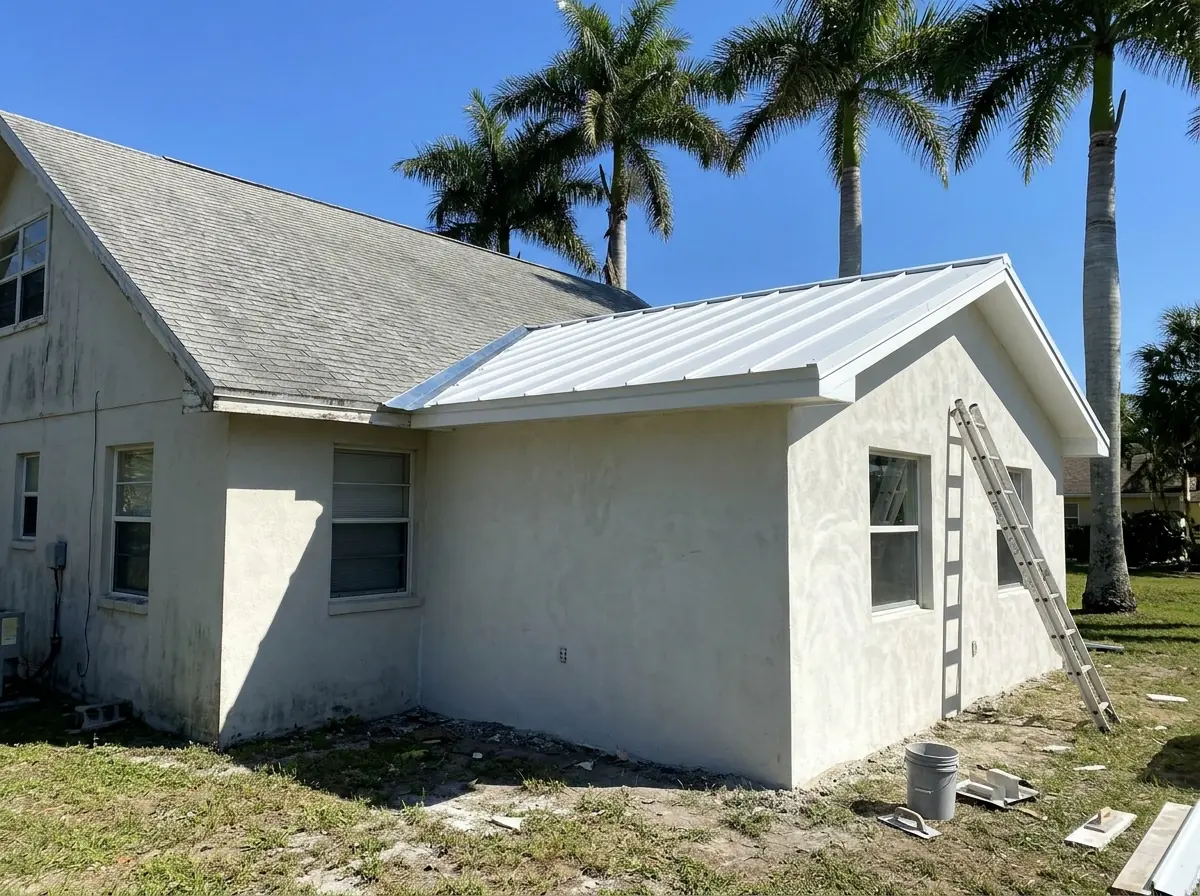
Additions and Tie-Ins to an Existing Roof
A room addition or new porch often puts fresh metal against an older roof. The Florida Building Code calls for flashing wherever a roof changes slope or direction, and Broward's hurricane-zone rules set a floor for that metal: 16-ounce copper, 0.025-inch aluminum, or 26-gauge steel that is either G-90 galvanized or stainless. Ask for the tie-in to be drawn on paper before any metal is cut. Where the existing roof is tile or shingle, the transition flashing between tile and metal is its own detail.
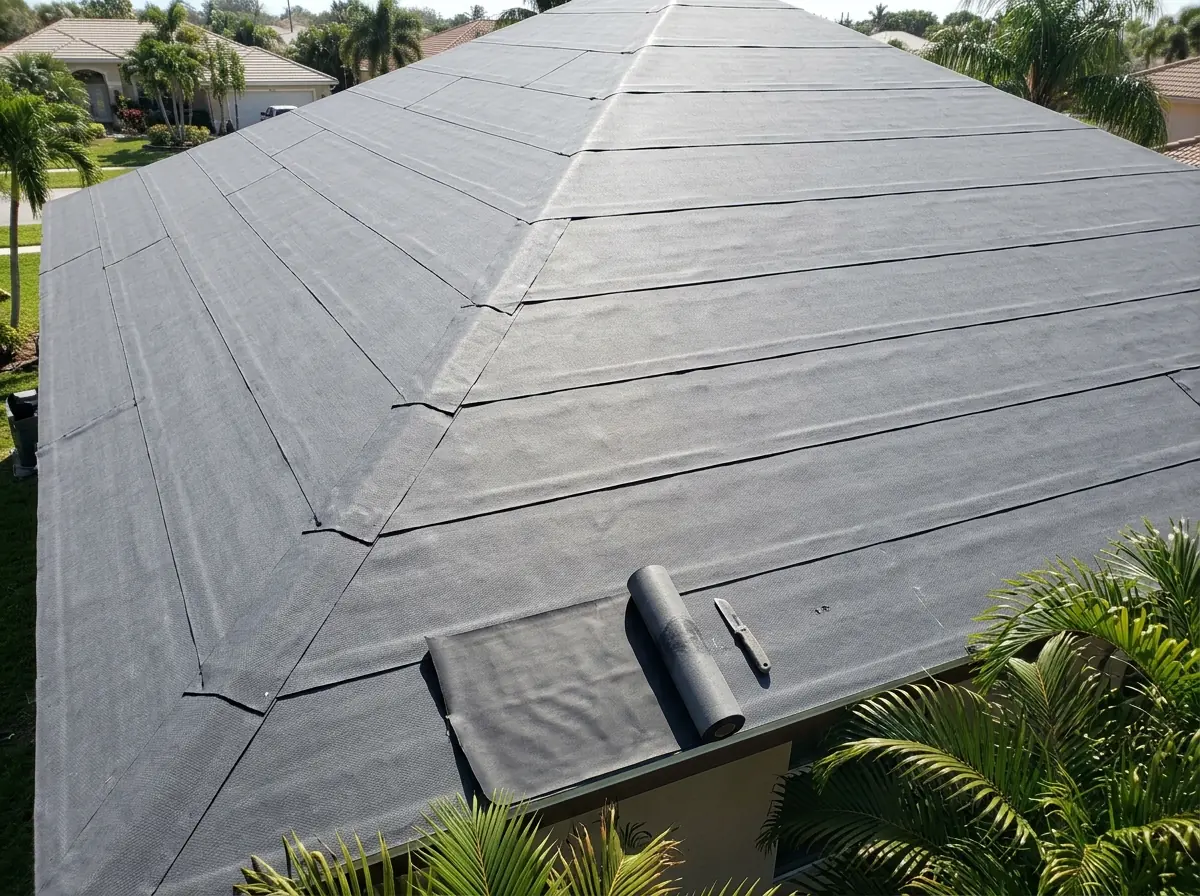
Underlayment and Dry-In Under Metal Panels
The underlayment keeps water out while the panels are going on and again if a panel is ever lost in a storm. Section 1518.2.1 of the high-velocity hurricane zone code allows three methods under metal:
- a self-adhered polymer-modified membrane (ASTM D1970) over the whole deck
- 3¾-inch self-adhered strips over every deck joint, with an approved underlayment over the entire roof
- two half-lapped layers of ASTM D226 Type II, D4869 Type III or IV, or D8257 sheet, nailed 12 inches apart in the field and 6 inches at the laps, through metal caps wherever the design wind speed is 170 mph or more
Metal gets hot, so membranes sold for it are rated higher: one lists in-service temperatures up to 240°F. Synthetic underlayment adds about $0.10 to $0.90 a square foot.
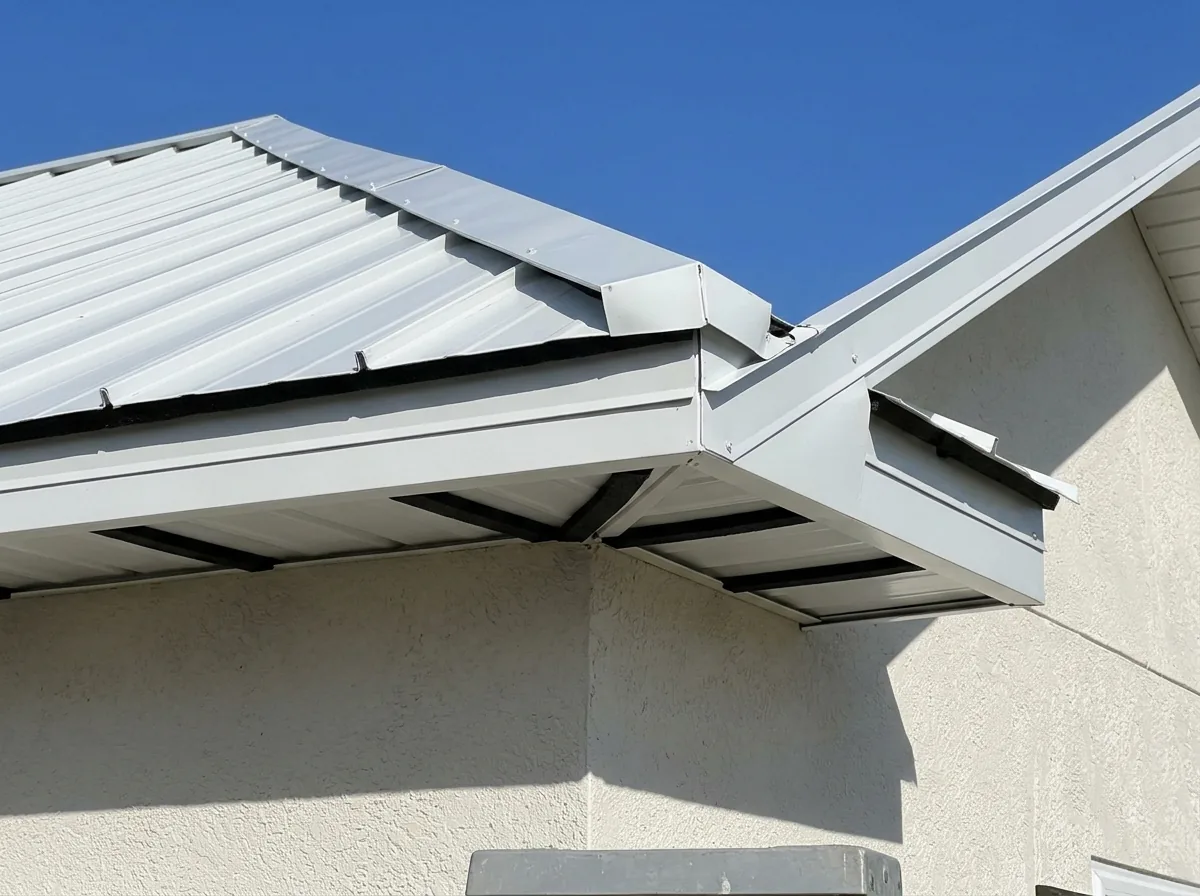
Drip Edge, Rake Trim and Closures
The hurricane-zone code sizes edge metal down to the nail spacing. Closures fill the open rib ends at the eave and ridge so wind-driven rain and insects can't get in. Code minimums for drip edge and the panel overhang:
- vertical face at least 1½ inches, reaching ½ inch below the sheathing
- deck flange at least 2 inches wide
- joints lapped 4 inches and set in flashing cement
- flange nailed every 4 inches with 12-gauge ring-shank nails
- metal panels no more than 1 inch past the eave
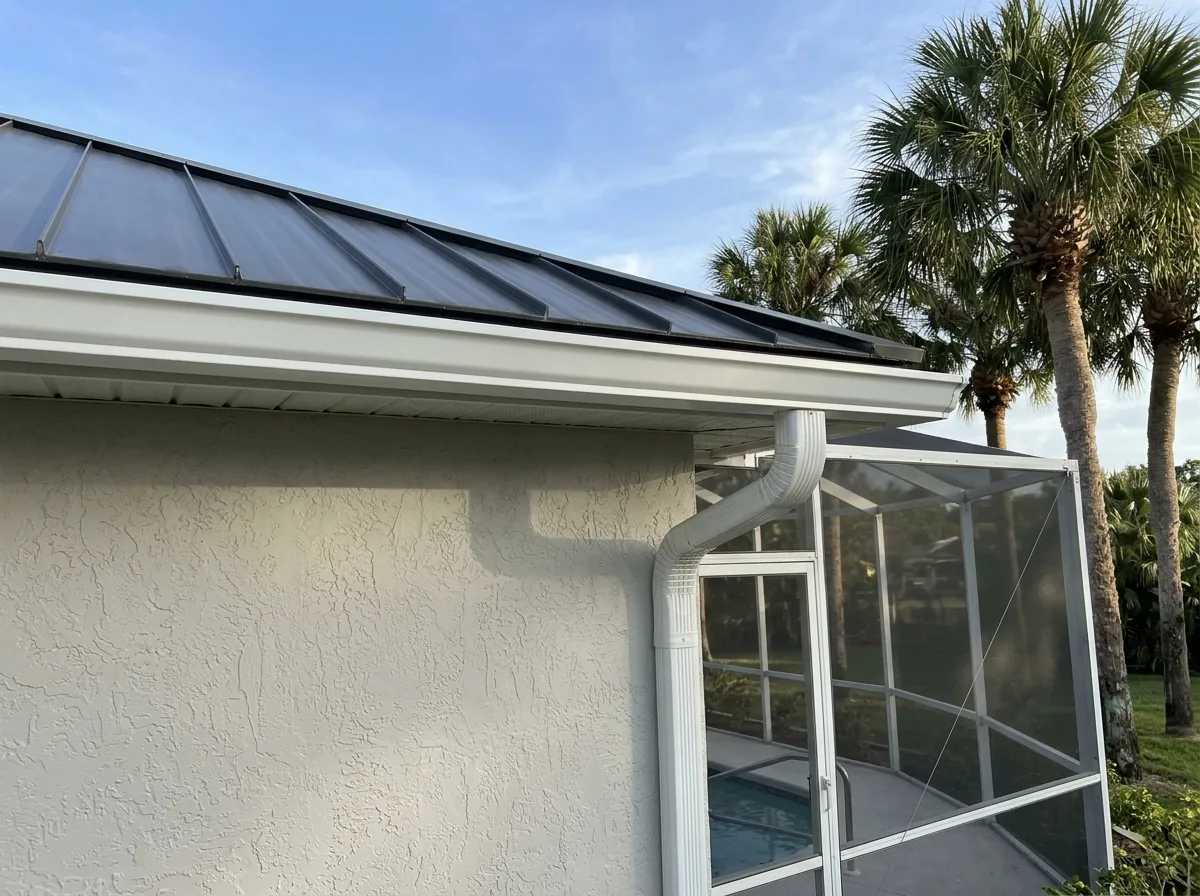
Gutters on a Metal Roof Edge
A metal roof sheds a summer downpour faster than tile, so the gutter has to catch water that leaves the eave with some speed. Ask for the gutter to hang from the fascia below the drip edge, not from screws through the panels, and for gutter metal that suits the roof. Panel warranties exclude damage from copper runoff, for one; the aluminum roofing page lists the metals that don't mix.
Why Pompano Beach homeowners call Pompano Metal Roofing
- One independent roofer per request, never a call list
- Ask for tear-off, deck repair and permit as separate lines
- No fee to homeowners for the referral or the estimate
- Your details go to that one roofer and nobody else
Metal Roof Installation Cost, Line by Line
National guides disagree by about two to one, so read a quote by its parts rather than by one total. Angi's national average is $11,766, with most owners paying $6,043 to $18,341. Typical parts of an installation price:
Labor
$4 to $8 a square foot on HomeGuide's figures. Fixr puts labor at 50% to 80% of the total, and Angi at about 60%.Panels by gauge
26-gauge steel runs about $1.50 to $5 a square foot for material and 24-gauge about $3 to $7.Trim and flashing
Forbes adds 20% to 40% to the material cost, more on roofs with many hips and valleys.Waste
Roofers usually add 10% to 15% to the material order on complex roofs.Underlayment
Often already counted in the quote. Ask which of the three code methods it uses.
Metal Roof Installation and the HVHZ Product Approval
Broward County sits in the High-Velocity Hurricane Zone (HVHZ). Every roofing component there needs "a valid and current product approval," either a Florida approval (FL number) or a Miami-Dade Notice of Acceptance. What that means when you read a metal roof quote:
The approval beats the brochure
Where a manufacturer's printed instructions and the approval disagree, the code says the approval governs.It covers the whole system
For metal, the approval includes the panel, the underlayment and every related accessory. The assembly is tested to TAS 125 and installed per RAS 133.Clip and screw spacing come from it
One approved aluminum panel allows clips 18 inches apart in the field but only 12 inches apart at the perimeter and corners, where wind pulls hardest.It has an expiration date
Check that the approval is current on the day the permit is filed, not just when the quote was written.Odd details go to the city
Where an approval doesn't cover a condition on your roof, the code lets the permit applicant propose an alternate detail to the building official.
You can look up an FL number on floridabuilding.org and a Notice of Acceptance on miamidade.gov. A swapped clip or a different underlayment means the roof no longer matches the document the permit relied on.
See how the permit, inspections and deposit work on a full re-roof.