
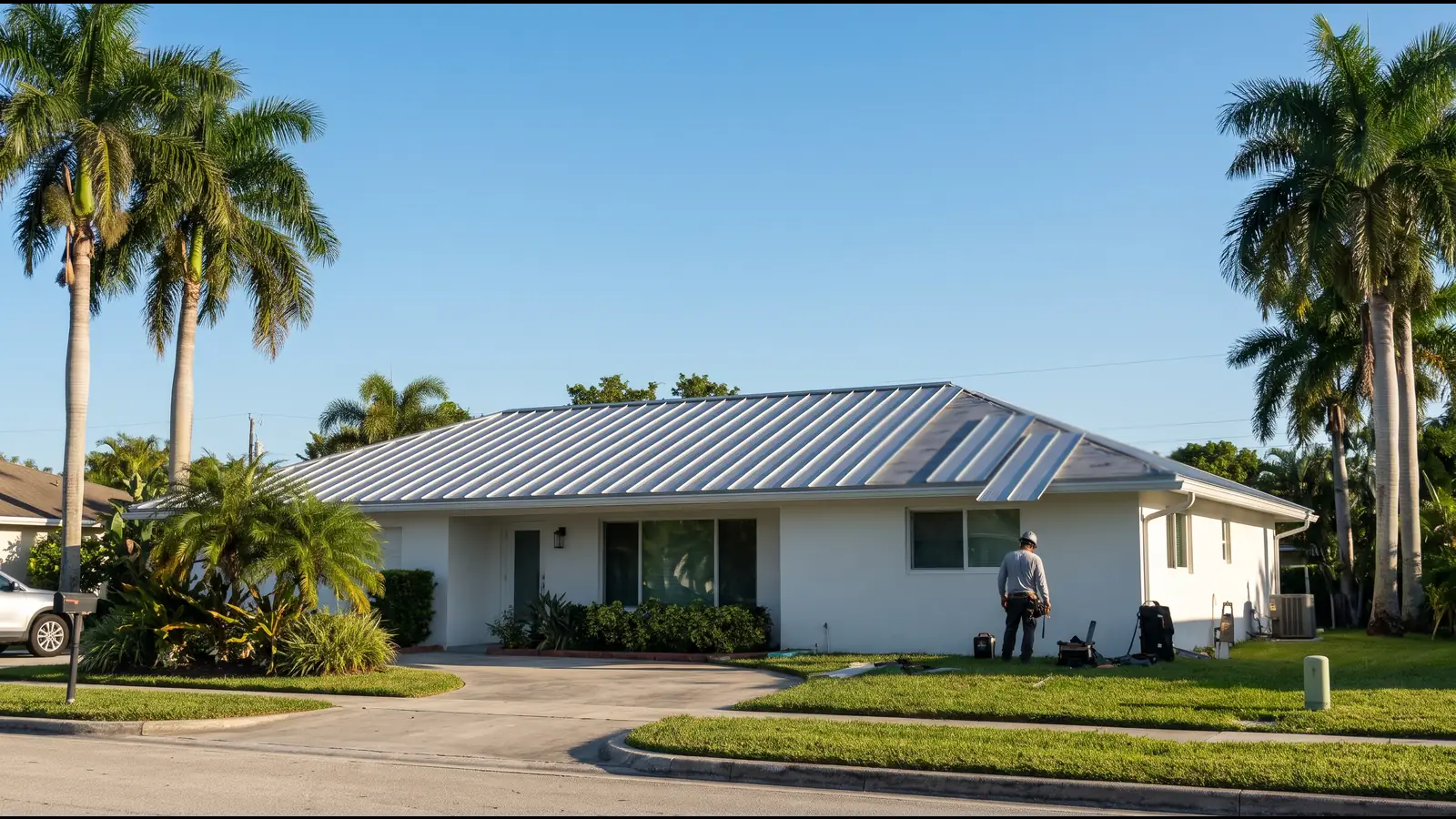
Metal Roof Replacement by What's Up There Now
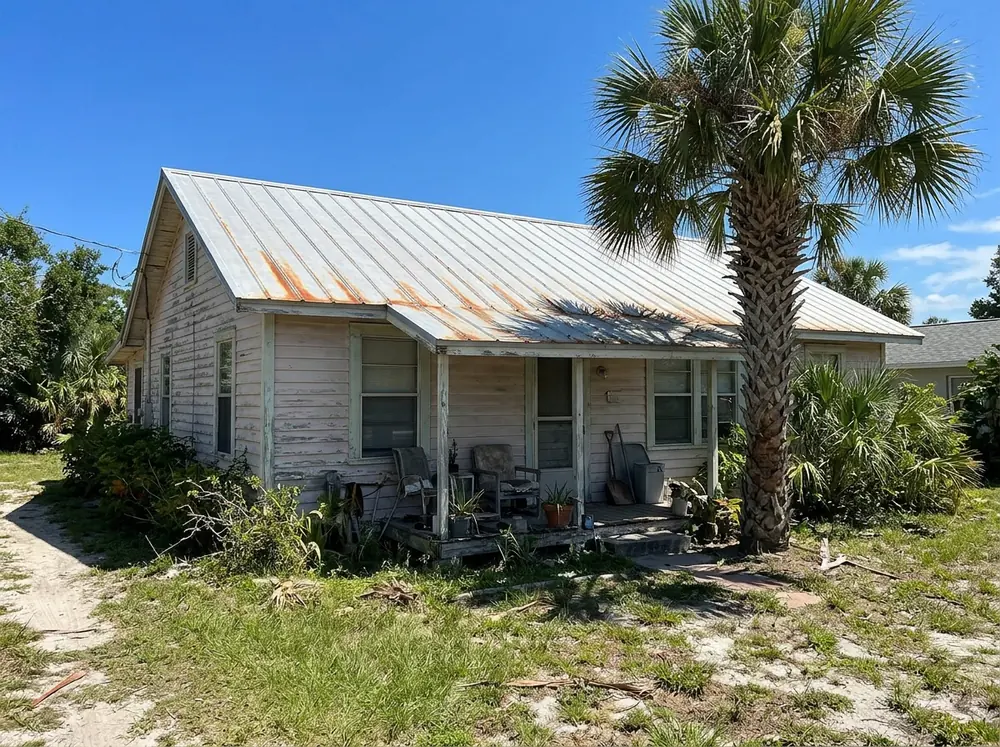
Rusted 5V and Exposed-Fastener Roofs
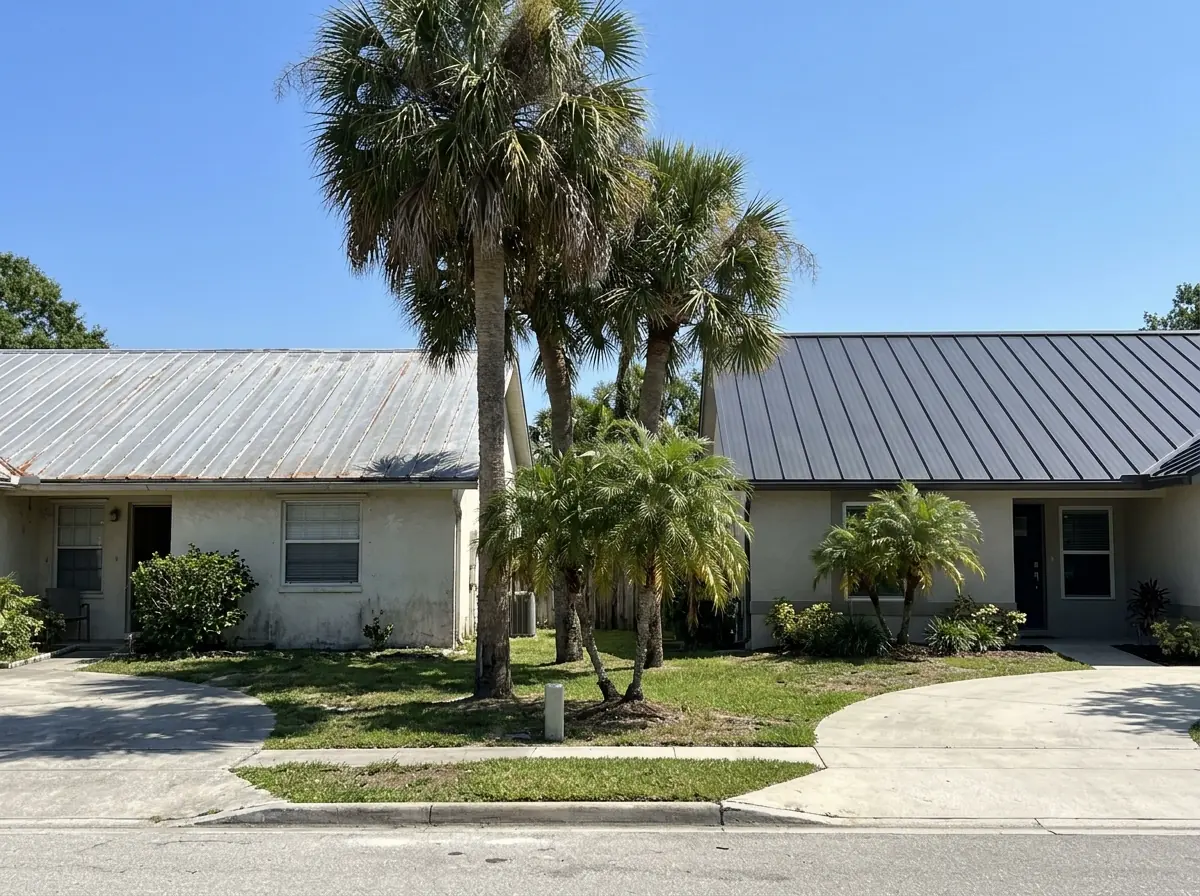
Older 5V roofs usually fail at their screws first and their steel second. A few rust spots can be treated, but once corrosion shows across many panels and leaks keep coming back in different places, the guides point to replacement over repair. Spot rust repair runs about $300 to $3,000. Past that point a new roof is usually the better use of the money. If only the screws are tired, the metal roof repair page covers re-screwing.
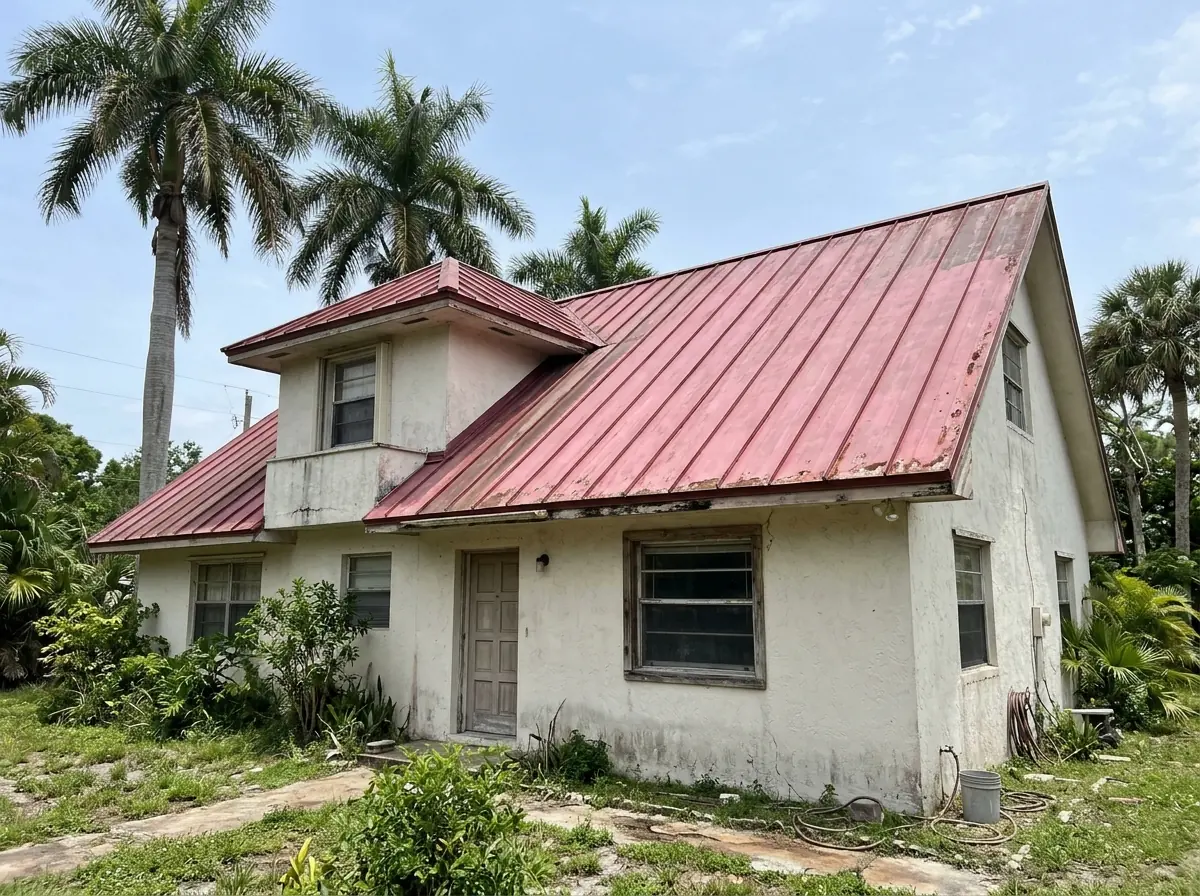
Aging Standing Seam Roofs
A standing seam roof that has only faded can often be cleaned and coated instead (see coating and repainting). Replacement makes sense when the steel under the paint is rusting through, seams have opened along whole runs, or the deck underneath needs work. A tear-off is also the only time the deck can be renailed and the underlayment brought to current code.
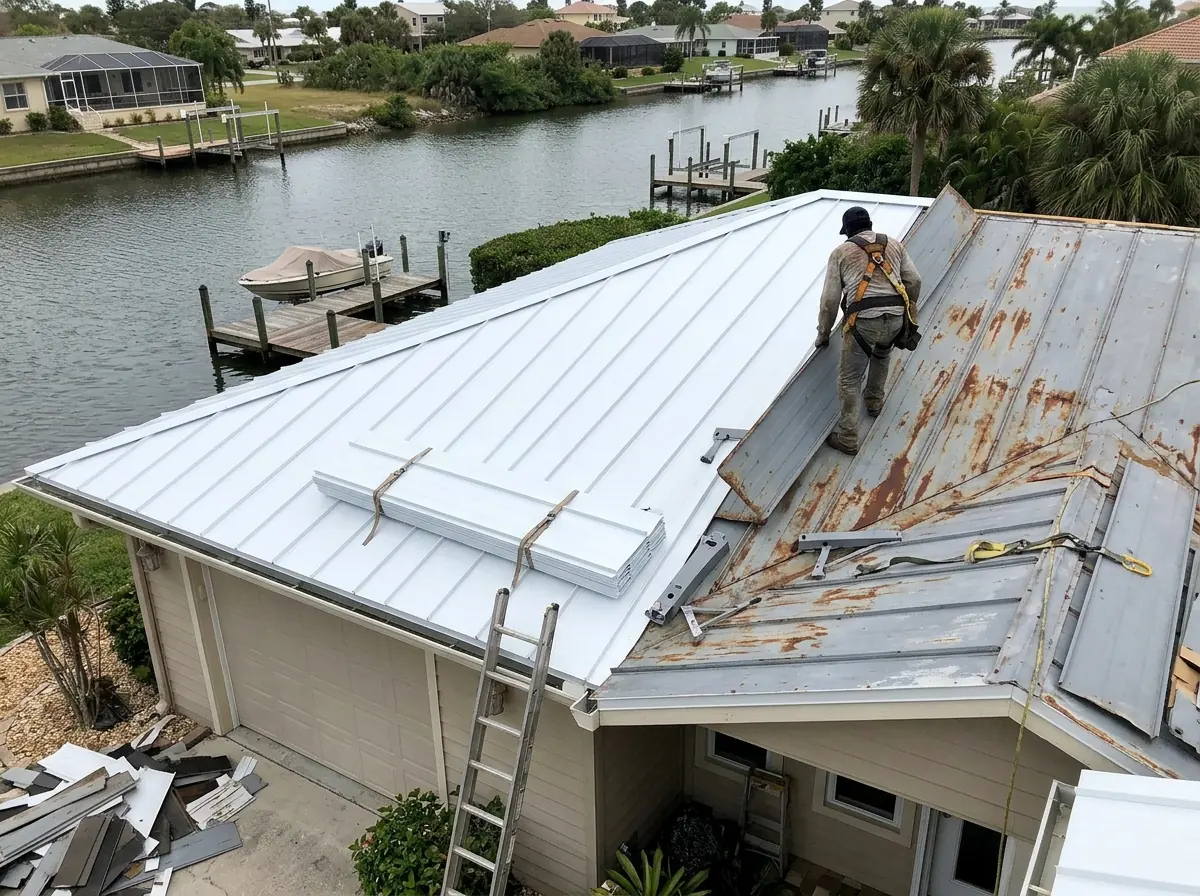
Steel-to-Aluminum Swaps Near Salt Water
A steel roof that rusted early on a waterfront lot is a common reason to switch metals. Some steel panel warranties don't apply at all close to salt water, so replacing like for like can buy the same problem twice. Aluminum costs more up front, and the aluminum roofing page covers the distances and fasteners.
Upgrading Exposed-Fastener to Standing Seam
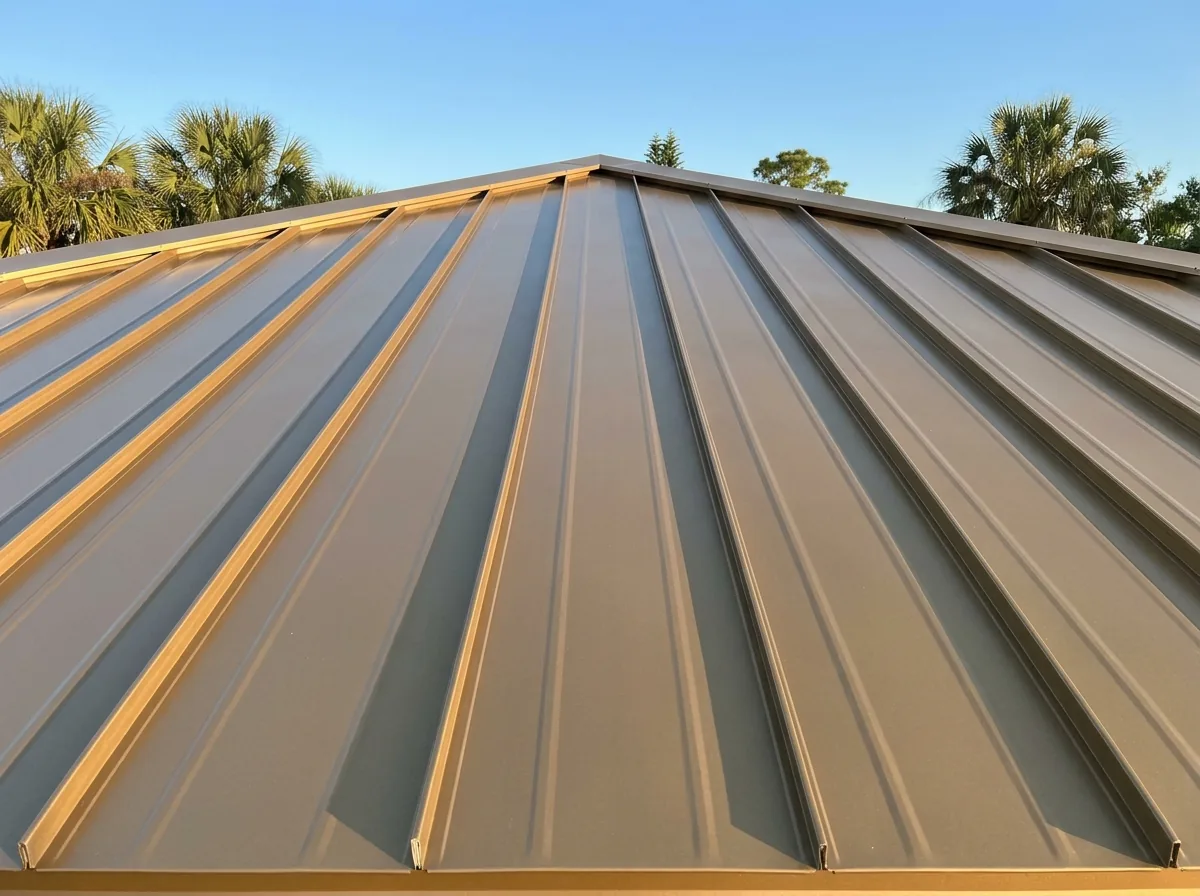
Replacement is the natural time to move from screwed-through panels to standing seam, where the clips hide under the seams. HomeGuide notes that concealed-fastener systems last longer because their fasteners aren't exposed to the weather. Per 100 square feet installed:
| Panel system | Installed per 100 sq ft |
|---|---|
| Exposed-fastener panels | About $500 to $1,200 |
| Concealed-fastener standing seam | About $900 to $1,600 |
Partial Slope or Full Roof Replacement
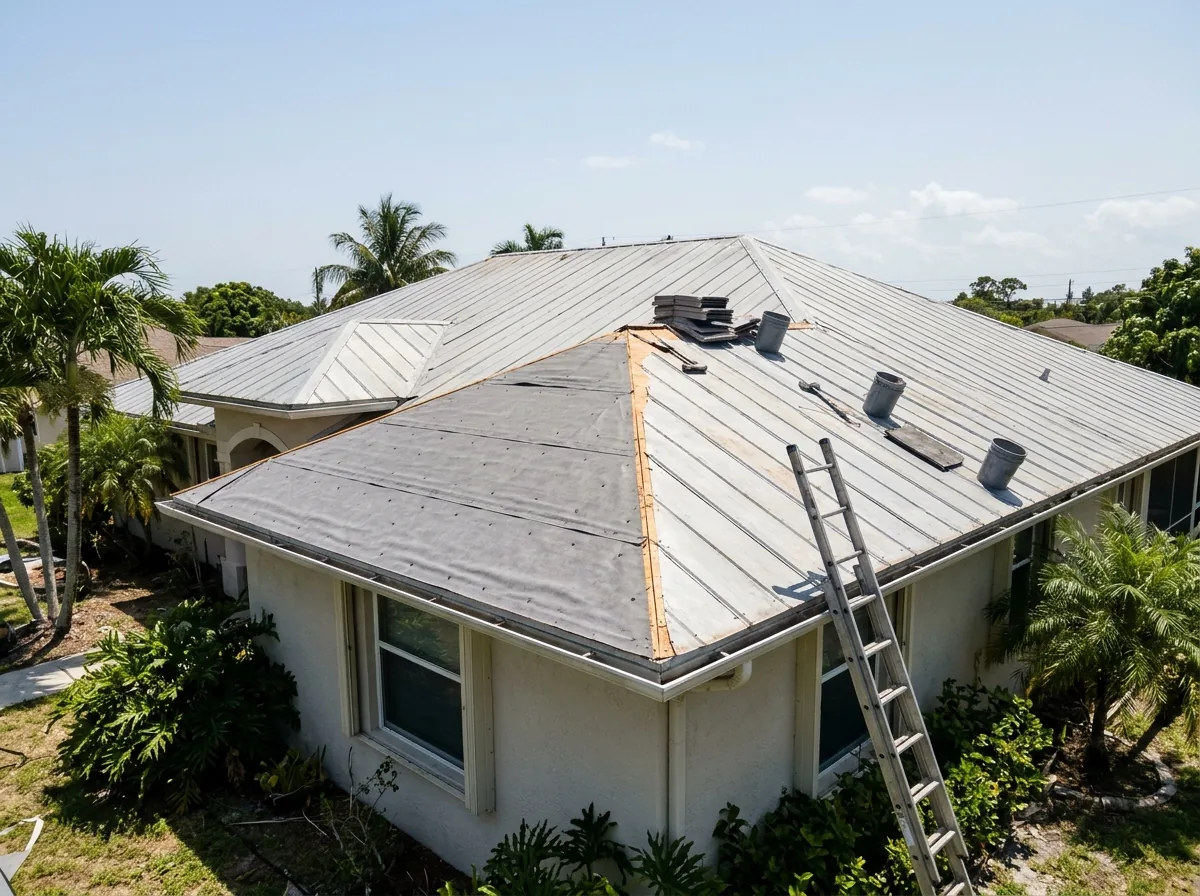
Replacing one worn slope can work when the rest of the roof is sound. The limit is the code's cap on how much of a roof section can be repaired or replaced in 12 months, explained under the 25% rule. New panels beside old ones won't match in color, so ask to see the two together before choosing a partial job.
Why Pompano Beach homeowners call Pompano Metal Roofing
- One independent roofer per request, never a call list
- Ask for tear-off, deck repair and permit as separate lines
- No fee to homeowners for the referral or the estimate
- Your details go to that one roofer and nobody else
Permits and Inspections for a Metal Re-Roof in Pompano Beach
A metal re-roof in Broward follows the hurricane-zone section of the Florida Building Code and the city's own permit process. What the paperwork involves:
A permit for any roofing work
In the HVHZ, every re-roof, repair or maintenance job on a roofing component needs a permit, filed on the HVHZ Uniform Roofing Permit Application and signed by a licensed contractor.Attachments to the application
Two copies each of the signed owner's notification, the product approval, the fire listing and the detail drawings.Electronic filing
The City of Pompano Beach takes applications through Click2Gov and reviews plans in ePlan. Its one-permit approach puts roofing on the same permit as other trades on the job.Notice of Commencement
For a contract over $5,000, a copy of the notice has to be filed with the permit office before the first inspection.Deck work
Rotten or water-soaked sheathing has to be cut out and replaced before the new roof goes on. The building official isn't required to inspect the renailing, so ask for photos.Inspections
For metal panels, one during or after the underlayment, one during panel installation, and a final. The city inspects Monday to Thursday, and a request made by midnight gets the next inspection day.
Florida Statute 553.844 adds mitigation to a re-roof on a site-built single-family home. The new roof must include a secondary water barrier and stronger deck attachment. Roof-to-wall connections are added only on homes in the wind-borne debris region with an insured or assessed value of $300,000 or more, and only where they can be done for about 15% of the re-roof cost.
Deposits on a Metal Roof Replacement
Under Florida Statute 489.126, a contractor who takes more than 10% of the contract price up front on residential work has to file for permits within 30 days of being paid and begin the job within 90 days of the permit's issue date. The exceptions are just cause or a longer schedule you agreed to in writing. If those dates pass, the statute has the owner send a written demand by certified mail, return receipt requested. A contractor who still does nothing within 30 days of that letter can be presumed to lack just cause. HomeGuide's advice also holds: never pay the full price before the work begins.