
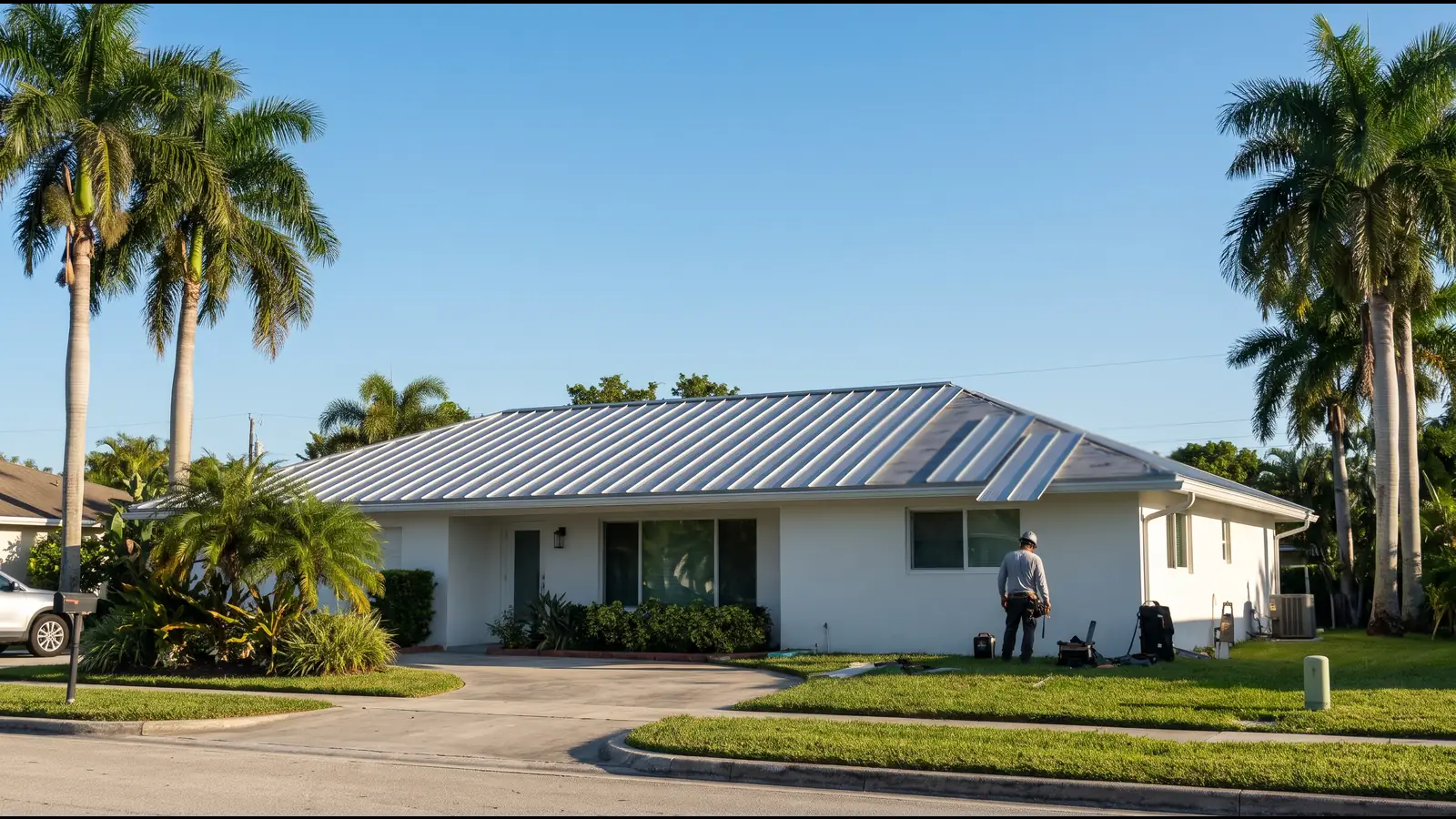
Commercial Metal Roofing by Building Type
Commercial metal work follows the same Broward hurricane-zone approvals as a house, but the roofs are bigger, flatter and covered in equipment. What changes from one building to the next is the deck, what sits on the roof and how close the building is to salt water.
Warehouses and Flex Space
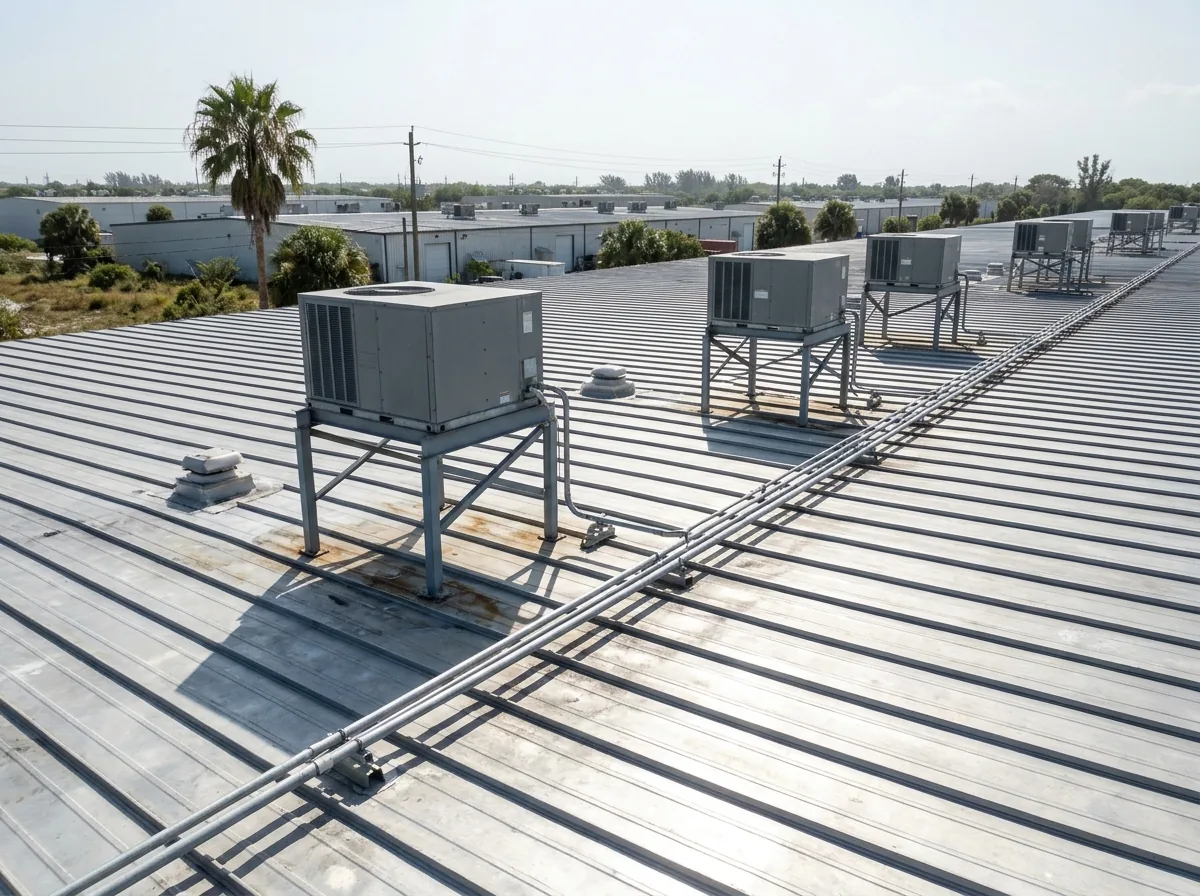
A warehouse roof is mostly long, shallow panel runs with AC units, exhaust fans and conduit sitting on them. In Broward's hurricane zone, rooftop equipment has to be secured to the structure for wind, wood sleepers aren't allowed, and service lines must ride at least 8 inches above the finished roof. Equipment legs get taller as units get wider, so a reroof is a good time to raise anything sitting too low. How flat the roof can go depends on the panel, and low-slope metal roofing covers the minimum slopes.
- Equipment up to 24 inches wide: legs at least 14 inches.
- Units 61 inches and wider: legs at least 48 inches.
Metal Building Retrofits
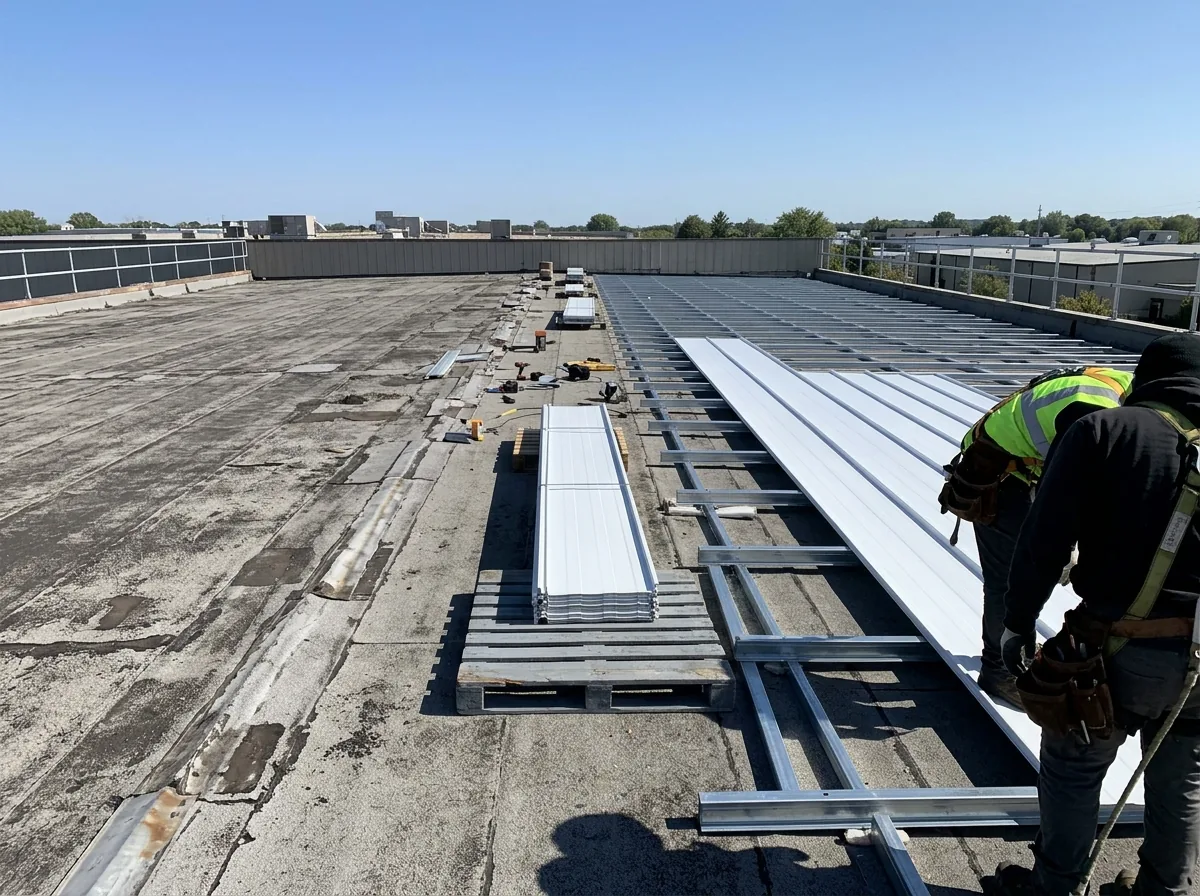
A metal retrofit puts new sub-framing and panels over a tired flat or metal roof instead of tearing it off. Broward's code allows one additional roof system over the original, but only after the old roof passes the reroofing tests, and a wet or failing roof still has to come off.
- Moisture survey: no more than 5% moisture by weight in the old membrane and 8% in its rigid insulation.
- Thin steel decks: decks under 22 gauge need a fastener pull test before a recover.
Storefronts, Restaurants and Mansards
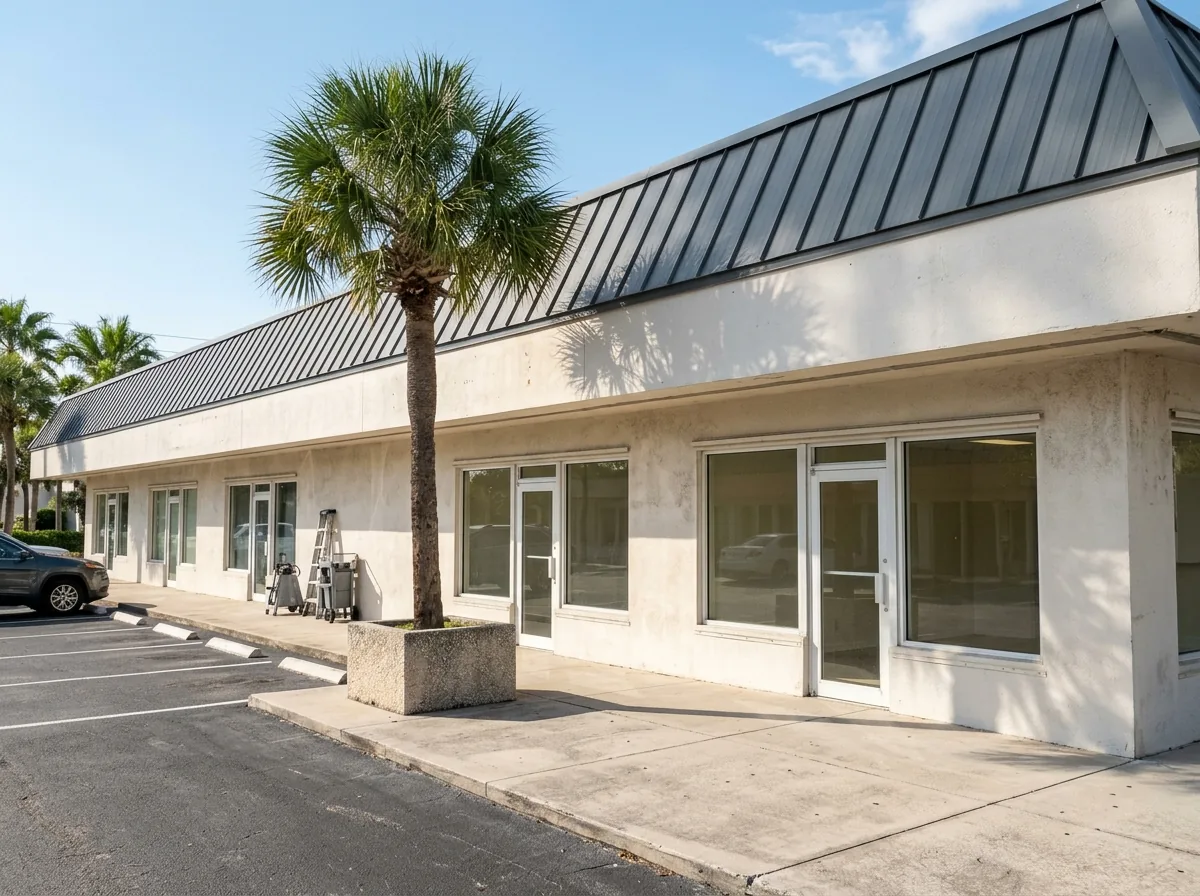
On a strip center or restaurant, the metal people notice is the mansard or canopy over the storefronts, and the roof behind it is often low slope. Color and trim lines matter here, and the PVDF finish on standing seam is what holds that color. Restaurant roofs add kitchen exhaust and AC units: condensate lines can't drain onto the roof, and every curb needs flashing that fits the roof system's product approval. Phasing the work around opening hours is part of the quote, so ask for it in writing.
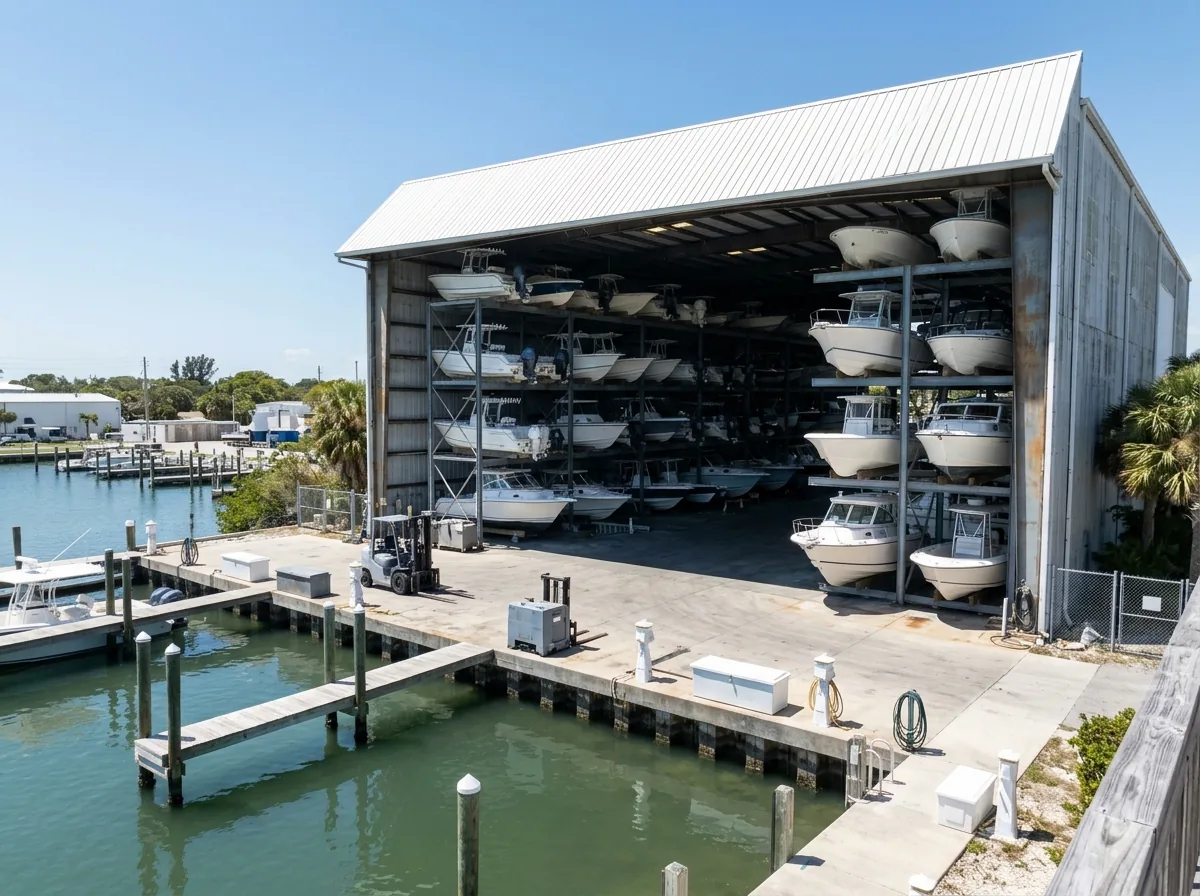
Marina and Boat Storage Buildings
Dry-stack boat barns, dock offices and marine repair shops sit right on the water, where salt spray and wind both work harder on a roof. The metal and fastener choice near salt water is covered on aluminum roofing. Wind matters as much: in the hurricane zone every building is designed as Exposure C unless Exposure D applies, and D covers sites with at least 5,000 feet of open water upwind, or within 600 feet of such a site. Ask whether the engineer used Exposure D for a building on the water.
Why Pompano Beach homeowners call Pompano Metal Roofing
- One independent roofer per request, never a call list
- Ask for tear-off, deck repair and permit as separate lines
- No fee to homeowners for the referral or the estimate
- Your details go to that one roofer and nobody else
What Sets the Price of Commercial Metal Roofing
A commercial bid has more lines than a house. Before you compare two numbers, check that both cover these:
Panel and gauge
Cost guides list 22-gauge steel for commercial and high-end work, about $4 to $8 per square foot for the metal alone.Tear-off or recover
A recover saves disposal but adds the moisture survey and deck testing.Deck repair
Rusted steel deck exposed on the roof side has to be treated with a rust inhibitor before a recover.Rooftop equipment
Disconnecting, lifting and resetting units, plus taller stands where the leg table requires them.Drainage
The code makes the roofer explain to the owner whether overflow scuppers are needed where parapets could trap water.Access
Height, lifts and work around tenants are why commercial repairs cost more per square foot than residential ones.
Condominium and HOA buildings are their own job, with board votes and reserve studies; condo and HOA metal roofing covers them.
See metal roof coating and painting if the existing panels are sound and a coating could put off a retrofit.