
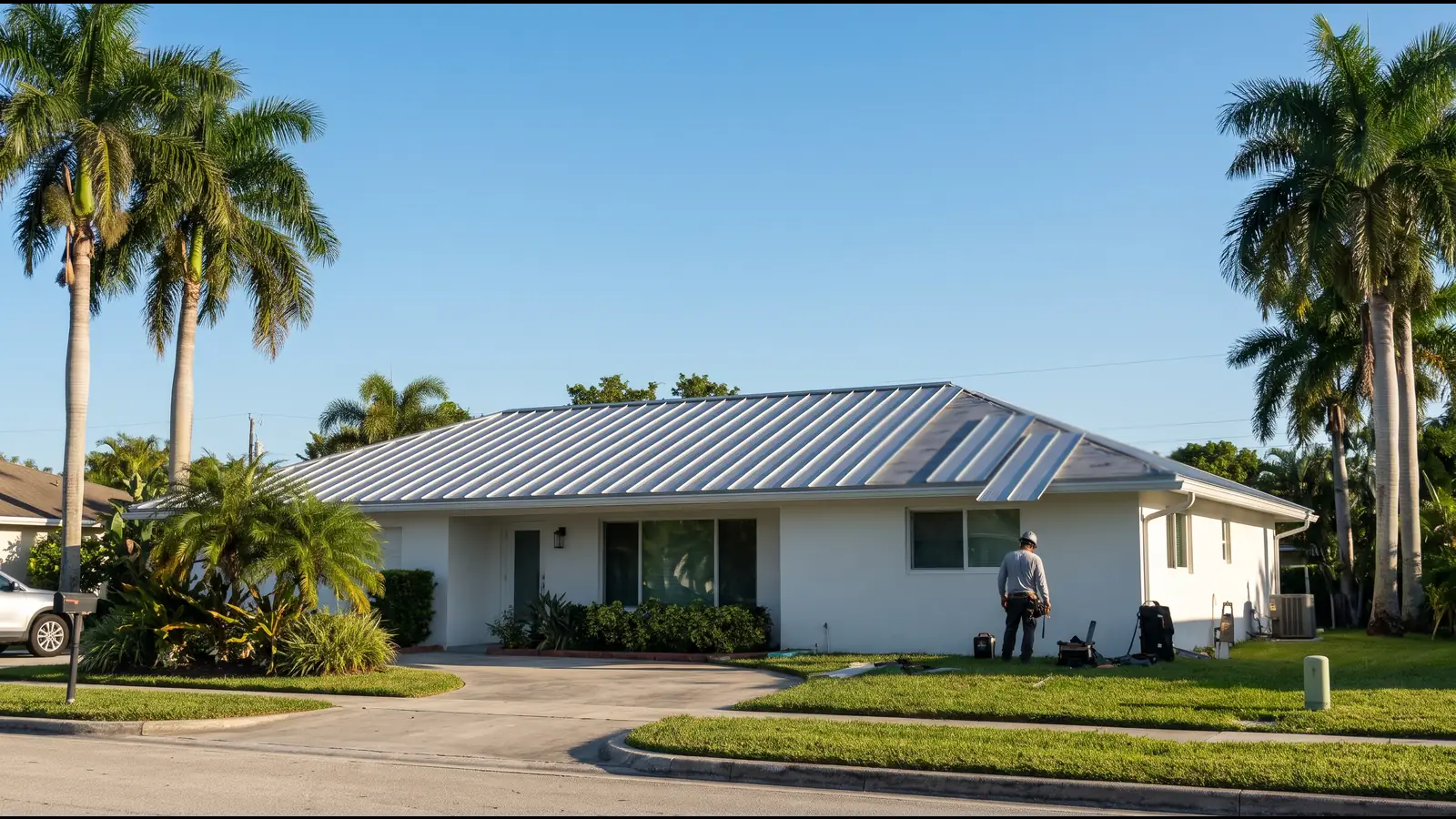
Metal Roof Leak Repair by Where the Water Gets In
Water rarely comes through the middle of a metal panel. It gets in where the panels stop or are cut: at a wall, a pipe, a skylight curb, a valley or the ridge.
Wall and Chimney Flashing Leaks
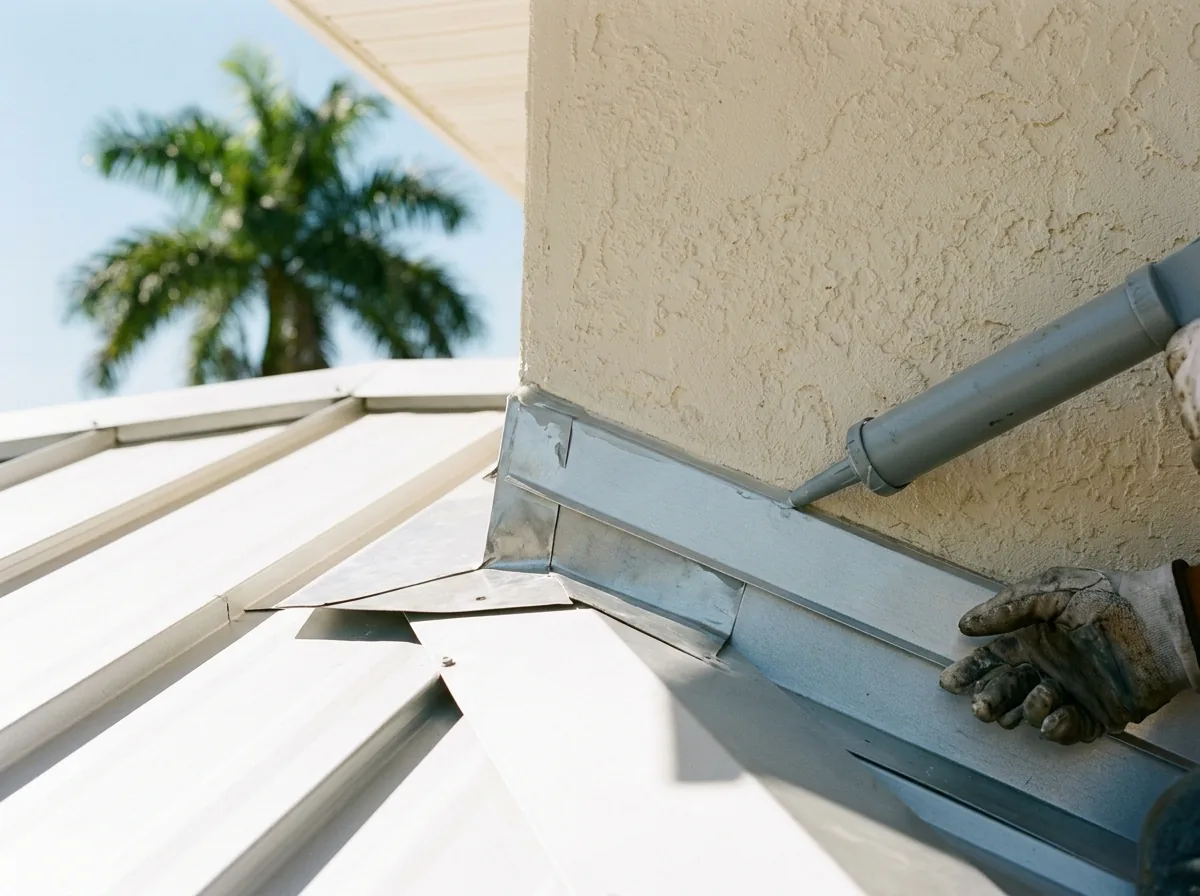
Where a metal roof meets a stucco wall, a parapet or a chimney, two pieces of metal keep the water out. A base flashing turns up the wall, and a counterflashing covers its top edge. When the stucco cracks behind the counterflashing or its sealant dries out, water runs down inside the wall to a ceiling corner. Any chimney or penetration more than 30 inches wide also needs a cricket on its uphill side so water flows around it instead of piling up against it.
- Chimney flashing repair: about $200 to $1,000 in cost guides.
Pipe Boots and Vent Penetrations
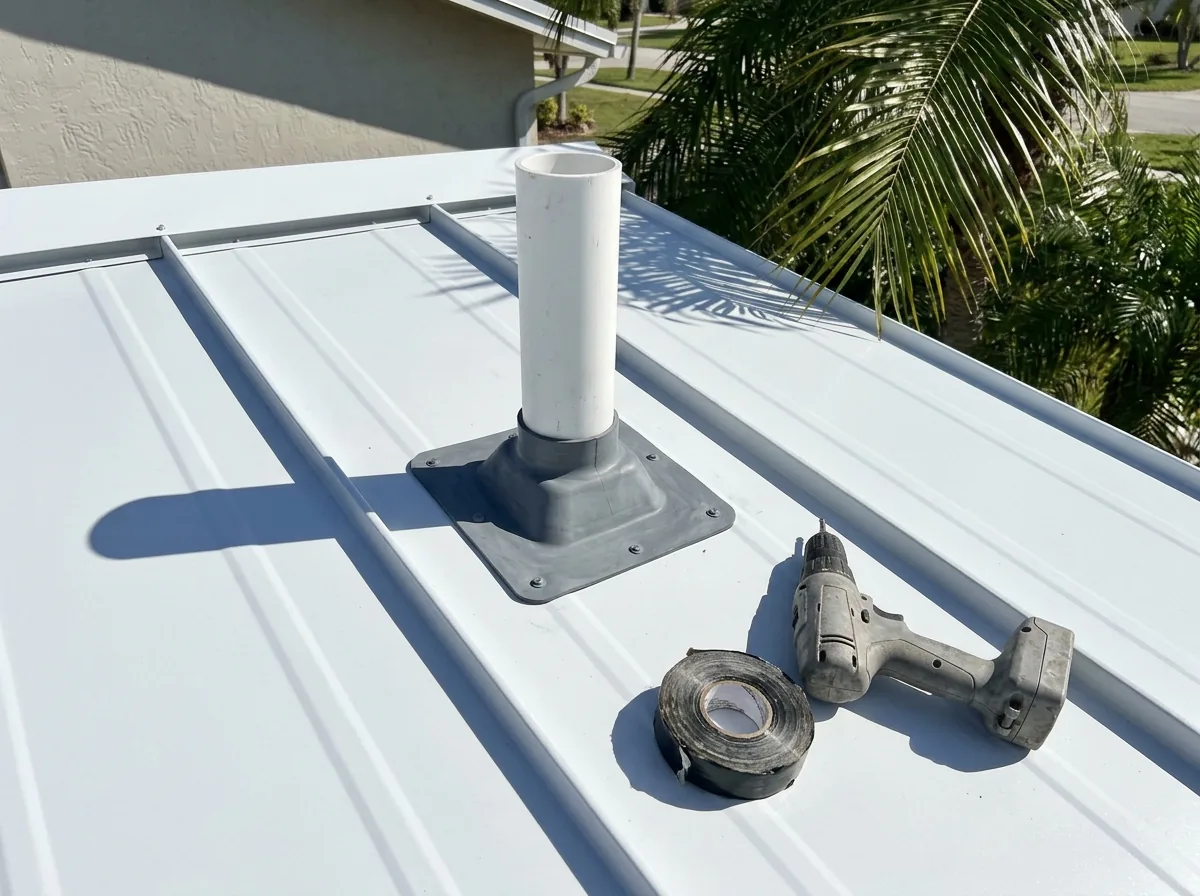
Every plumbing vent, bath fan and AC line is a hole through the roof. Roofers usually seal a pipe boot with both butyl tape and caulk, and when either one lets go, water follows the pipe down into the attic. In the High-Velocity Hurricane Zone, pipes have to be flashed with a lead sleeve, a pitch pan or another method listed in the roof system's product approval.
- Lead flashing: at least 2.5 pounds per square foot.
- Flange: at least 4 inches.
- Typical repair: $200 to $500 per vent pipe.
Skylight and Curb Leaks
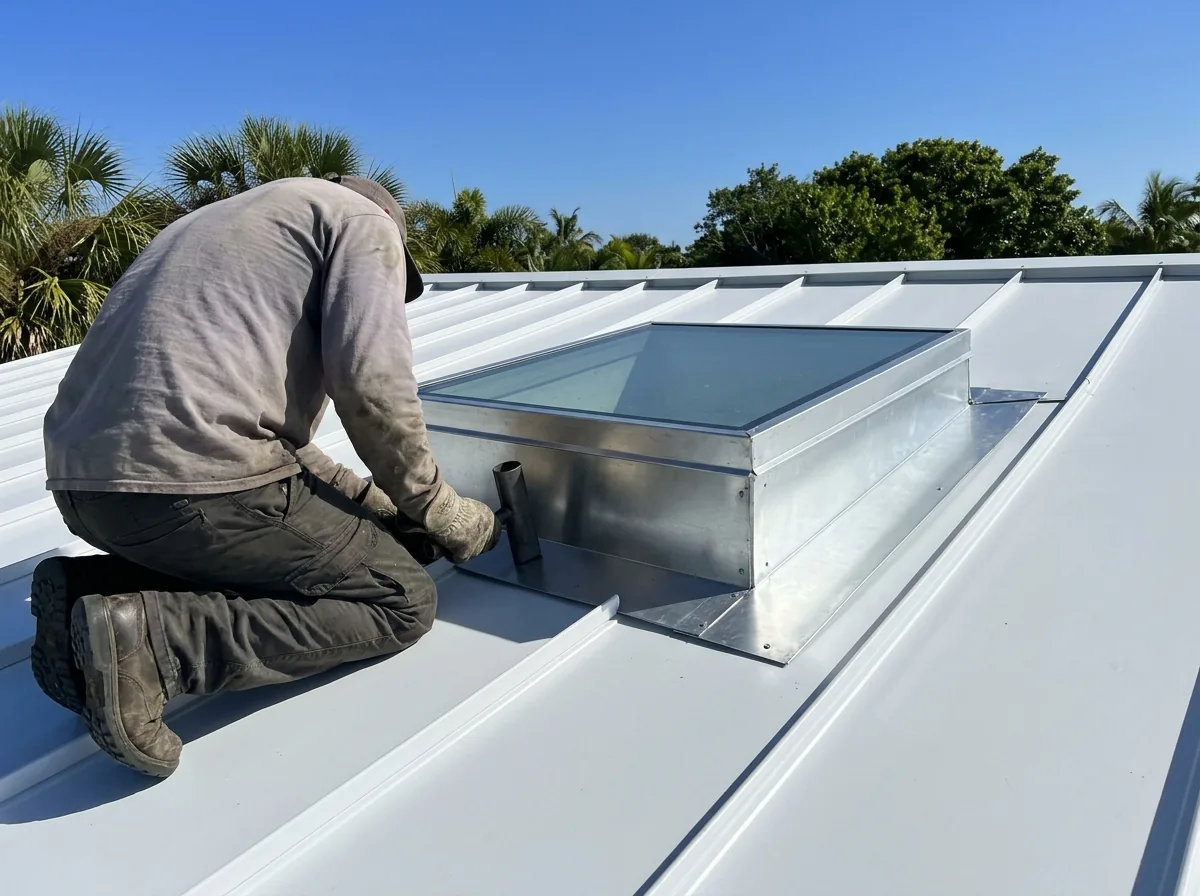
A skylight on a metal roof sits on a raised curb, and the panels above it have to send water around both sides. The upslope corners, where debris collects and the flashing folds, are where it usually fails. Skylight flashing repairs run about $200 to $500 in cost guides.
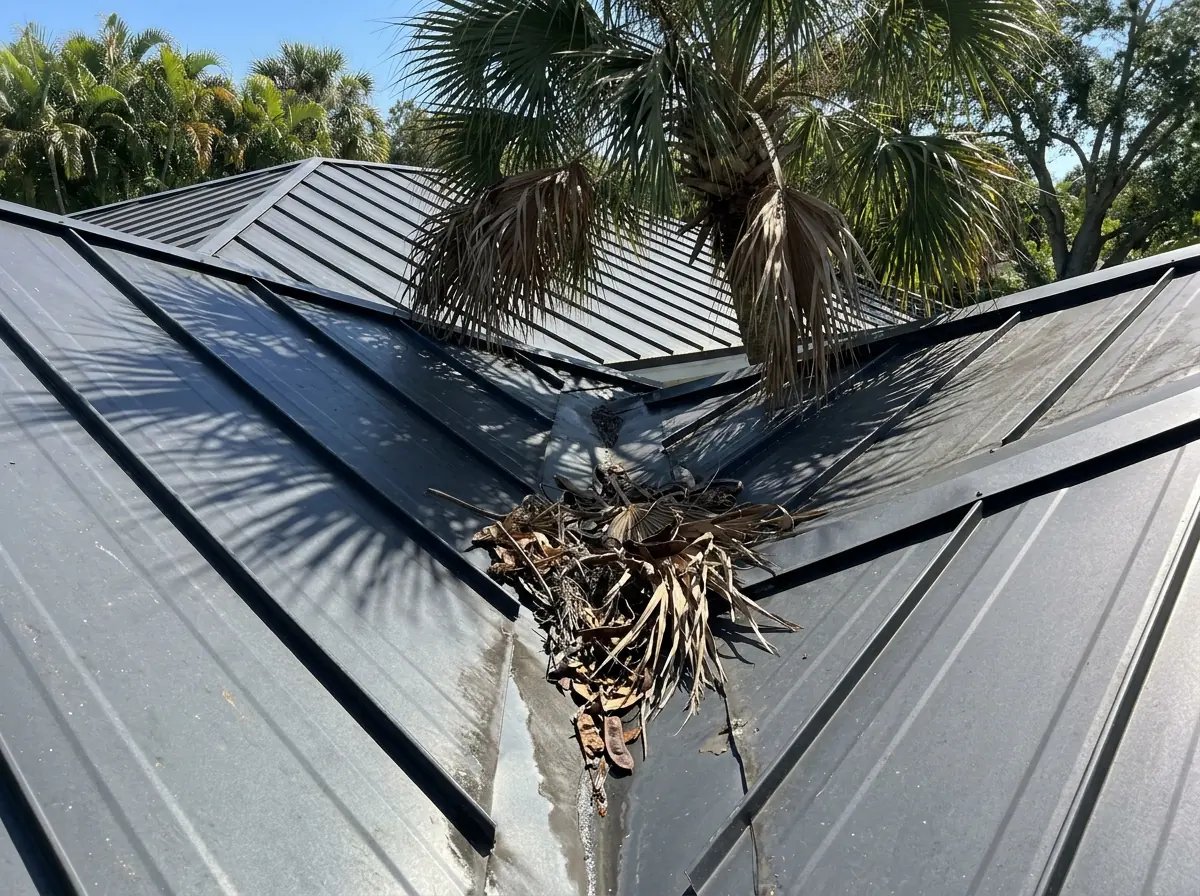
Valley Leaks
A valley drains two roof slopes at once. On hip roofs with palm trees nearby, fronds and seed pods build up in the valley, hold water against the metal and push it sideways under the panel edges. Valley flashing repairs run about $200 to $850, more if the valley metal is rusted through and has to be replaced.
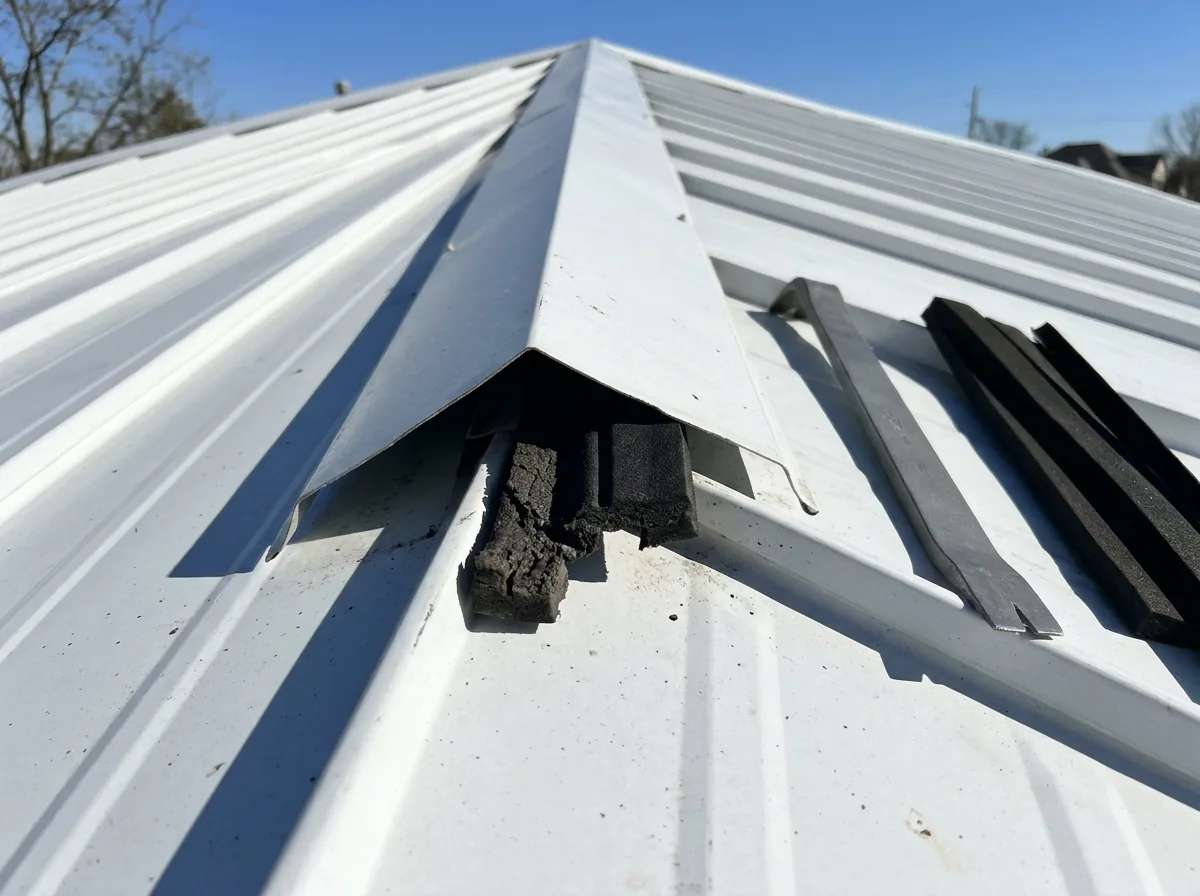
Ridge Cap and Closure Leaks
Foam closures fill the gaps between panel ribs under the ridge cap and at the eaves. When a closure is missing or has broken down, rain blown sideways in a storm gets in under the cap. The stain from a ridge leak tends to run along the middle of a ceiling, under the peak. If the ridge is also your attic vent, see metal roof ventilation for how a vented ridge should be built.
Why Pompano Beach homeowners call Pompano Metal Roofing
- One independent roofer per request, never a call list
- Ask for tear-off, deck repair and permit as separate lines
- No fee to homeowners for the referral or the estimate
- Your details go to that one roofer and nobody else
Metal Roof Leak Tracing, Step by Step
STEP 01
Start inside
A good roofer starts at the stain, then goes into the attic soon after rain and follows the wet wood uphill.
STEP 02
Water-test the suspect spot
The roofer runs a hose over one area at a time, low on the roof first, while someone watches inside. It's slow. It also shows which flashing is failing before anything gets cut.
STEP 03
Open and repair with approved parts
In the HVHZ, repairs have to use roofing components with a product approval. New boots, counterflashing and closures should match the roof's system. Ask what goes back in and whether it is listed in that system's approval.
STEP 04
Photos and permit
Ask for photos of the opened flashing and the finished repair. Ask too whether the repair needs a permit: in Broward it usually does, and metal roof replacement explains the permit and inspection steps.
Metal Roof Flashing Rules in Broward's HVHZ
A leak repair in Broward has to meet the hurricane-zone flashing details:
Counterflashing
It must be turned down over the base flashing by at least 3 inches and side-lapped at least 4 inches.Flashing metal
26-gauge G-90 or stainless steel, aluminum 0.025 inch thick, or copper at 16 ounces, as minimums.Penetrations
Curbs, collars or pitch pans per the roof system's product approval, and none in a valley.
See metal roof repair when the water traces back to loose screws, a failed lap or a rusted panel instead of flashing.